
GODDESS BLOG

The Gypsy Festival of Les Maries
As Provençal legend has it, Mary Magdalene arrived on the shores of Gaul with Mary Salome and Mary Jacobe, and possibly Joseph of Armithea. The mystery and intrigue of this legend involves a woman named Saint Sara. Some claim she was a native of Gaul who greeted the party fleeing the Roman Empire. Others say she arrived on the boat with the Marys, either an Egyptian handmaiden to Mary Magdalene, or better yet, the secret daughter of Jesus and Mary. Either way, Saint Sara has become the patron saint of the Romani people the world round, and I was headed there for the annual festival in honor of Saint Sara . . .



Finding Mary Magdalene Blog Series.
Saintes-Maries-de-la-Mer, Part 1: The Gypsy Festival of Les Maries
Originally Published: June 2, 2014
As Provençal legend has it, Mary Magdalene arrived on the shores of Gaul with Mary Salome and Mary Jacobe, and possibly Joseph of Arimathea. The mystery and intrigue of this legend involves a woman named Saint Sara. Some claim she was a native of Gaul who greeted the party fleeing the Roman Empire. Others say she arrived on the boat with the Marys, either an Egyptian handmaiden to Mary Magdalene, or better yet, the secret daughter of Jesus and Mary. Either way, Saint Sara has become the patron saint of the Romani people the world round, and I was headed there for the annual festival in honor of Saint Sara.
Saintes-Maries-de-la-Mer is a tiny beach town in the Camargue region of France. It is surrounded by a national park that is filled with long green grass and canals, all of which accommodate migratory birds from Africa. The feel is somewhere between American west and Spanish Conquistador.
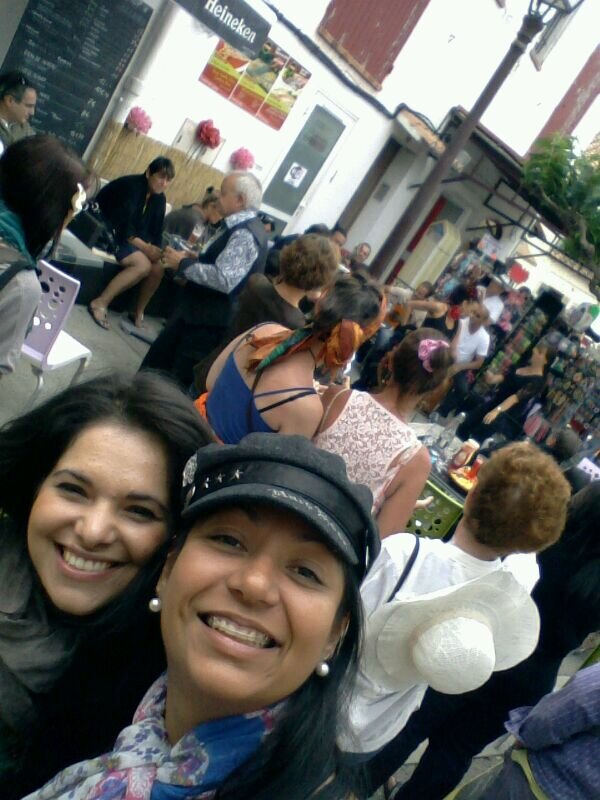
But before I found myself in Les Maries, I first had to find a way to get there from Arles–an exquisitely BEAUTIFUL town in France. So, I made my way to the tourist office and started a conversion with another woman looking to get to the festival. As it turns out, Celice, a Venezuelan national, was also on a pilgrimage. Hers revolved around the Camino de Santiago in Spain, but overlapped with the western French sites associated with my Mary Magdalene pilgrimage. Celice and I became fast friends. In fact, we were inseparable for those few days at the festival.
Celice and I found the bus, (super easy and way cheap), to Les Maries. We chatted the whole time about our pilgrimage experiences thus far, and also about all we hoped would happen at the festival.
As the bus approached our destination, it turned out that our hotels were right next to one another. (Kind of strange for a small town with several hotels). I laughed at the synchroncity. She told me she stopped seeing our similarities and meeting in Arles as coincidences, but as something more predestined. I walked her to her hotel first, and made a plan to meet her in two hours, but she insisted on walking me to my hotel for check-in, as well.
The moments that followed were very telling of what would come: My hotel had never received my reservation and down payment from the third party site I had originally booked through. And to top it off, they were completely booked for the festival. In her fashion, Celice said, “No problem, she’s staying with me.” In disbelief, I gladly accepted her offer.
My ex-hotel invited us to their private dinner/flamenco show that night. We gleefully arrived amongst the colorful guests, and were seduced by the home-cooked food and soulful Spanish gypsy music. Gypsies from the crowd, including a family from Brazil, danced and sang, as we shared wine and a love for the beautiful music.
Exhausted, yet in anticipation for the following day’s culminating fesitval event,The Procession of Saint Sara, Celice and I returned to the hotel, hardly able to sleep a wink. For my part, I thanked my guardian angels for the new friend, and angel, they sent my way.
READ NEXT BLOG: The Procession of Saint Sara
The Relics of Sainte Marie Madeleine
I arrived in Saint-Maximin-la-Sainte-Baume with a pep in my step. I had just an hour to experience the Magdalene presence there before returning my car in Aix-en-Provence.
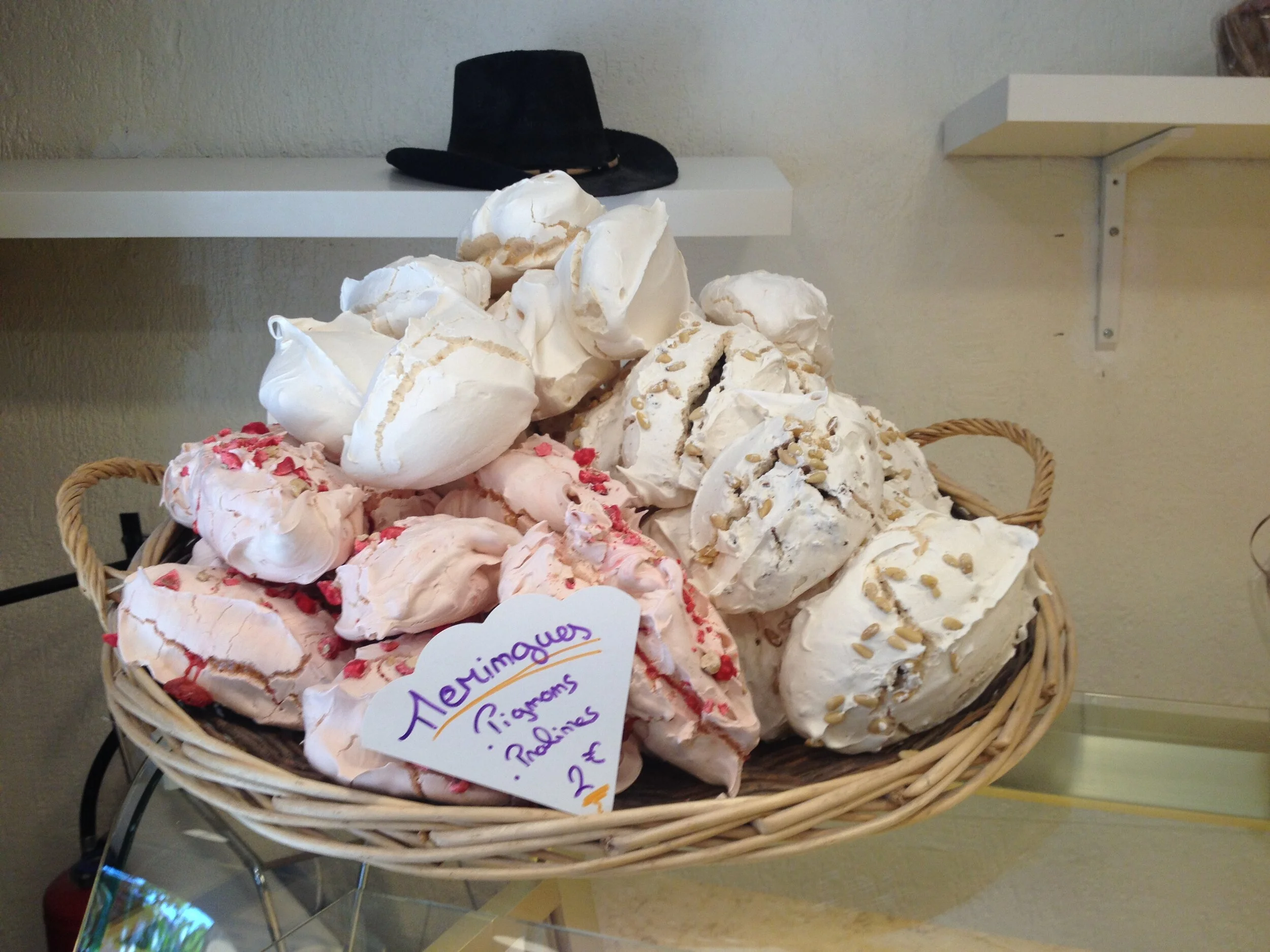
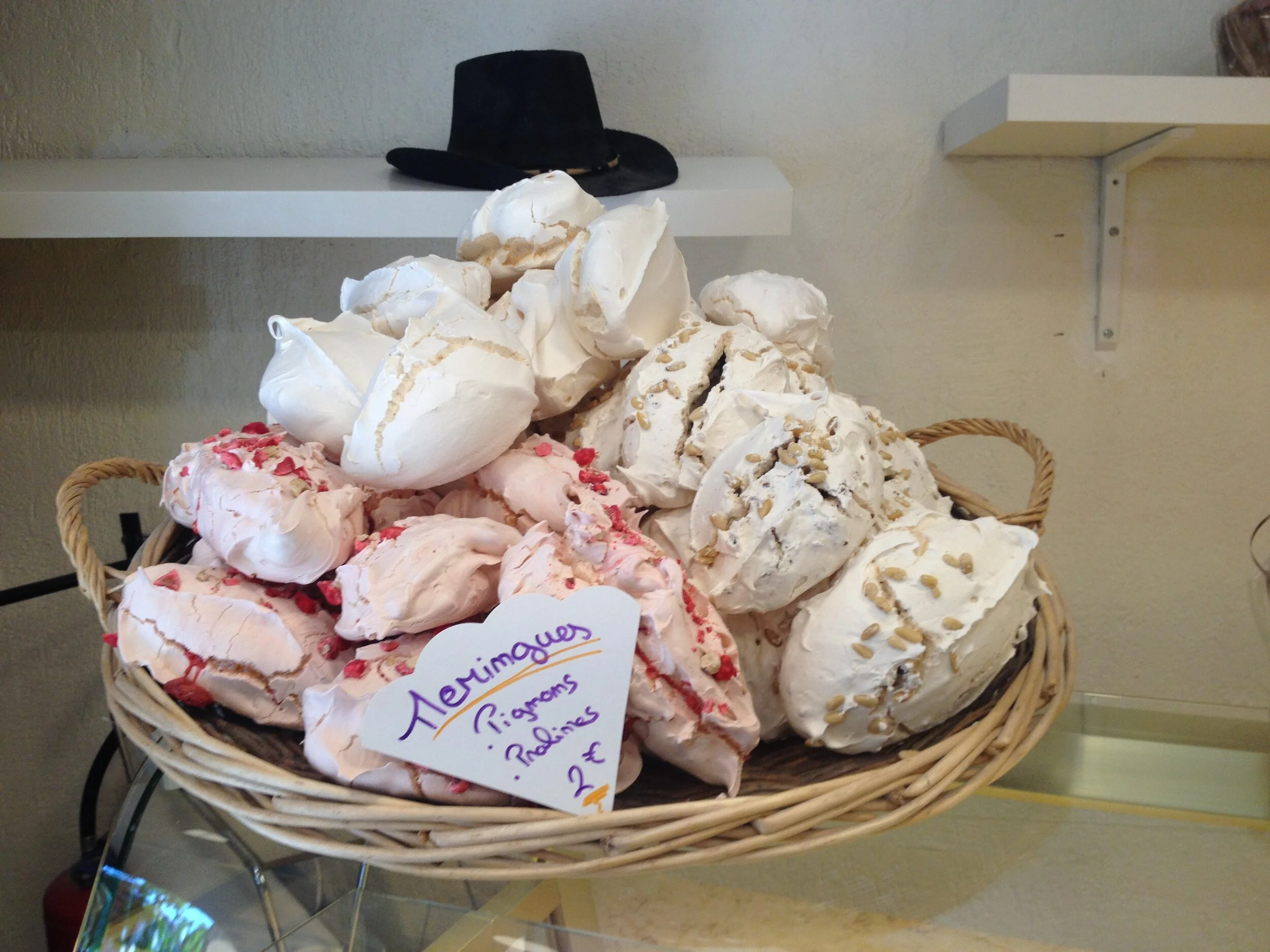
First, I decided to find a pastry to enjoy with my morning coffee. As luck would have it, I walked into the best artisinal patisserie in all of France! The shop was full of beautiful meringues adorned with pines nuts and delicate-looking tartes. My stomach only wanted a pain-au-chocolat, but my eyes feasted on them all. I walked across the way to a sidewalk cafe . . .

FINDING MARY MAGDALENE BLOG SERIES.
“Saint-Maximin-la-Sainte-Baume: The Relics of Sainte Marie Madeleine”
Originally Published: May 31st, 2014
I arrived in Saint-Maximin-la-Sainte-Baume with a pep in my step. I had just an hour to experience the Magdalene presence there before returning my car in Aix-en-Provence.
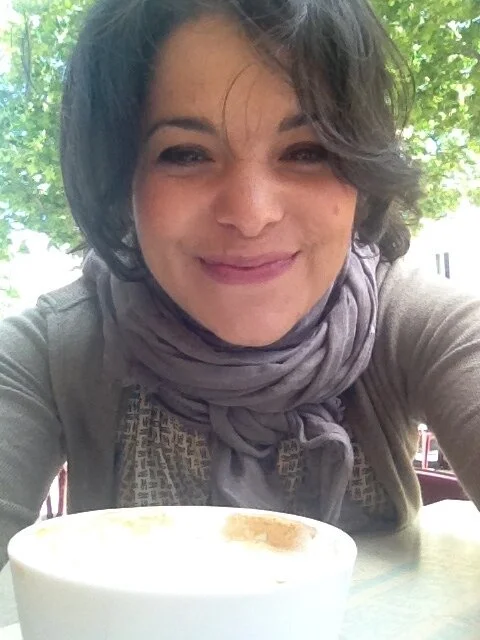
First, I decided to find a pastry to enjoy with my morning coffee. As luck would have it, I walked into the best artisinal patisserie in all of France! The shop was full of beautiful meringues adorned with pines nuts and delicate-looking tartes. My stomach only wanted a pain-au-chocolat, but my eyes feasted on them all. I walked across the way to a sidewalk cafe and ordered a cafe creme, which tasted somewhere like a caffè latte. After an exquisite moment of cafe life à la française, I was off in the direction of the basilica of St. Maximin.
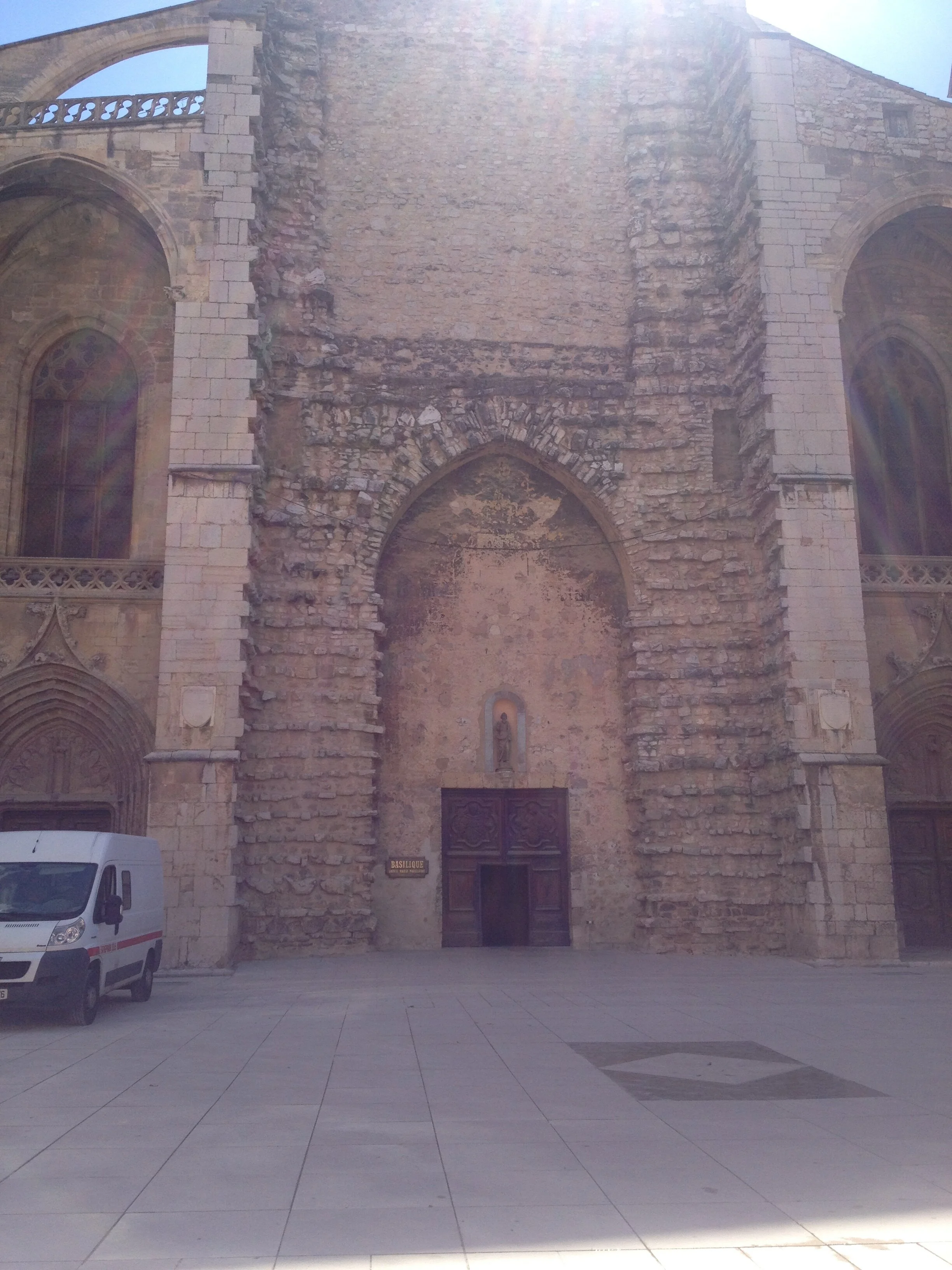
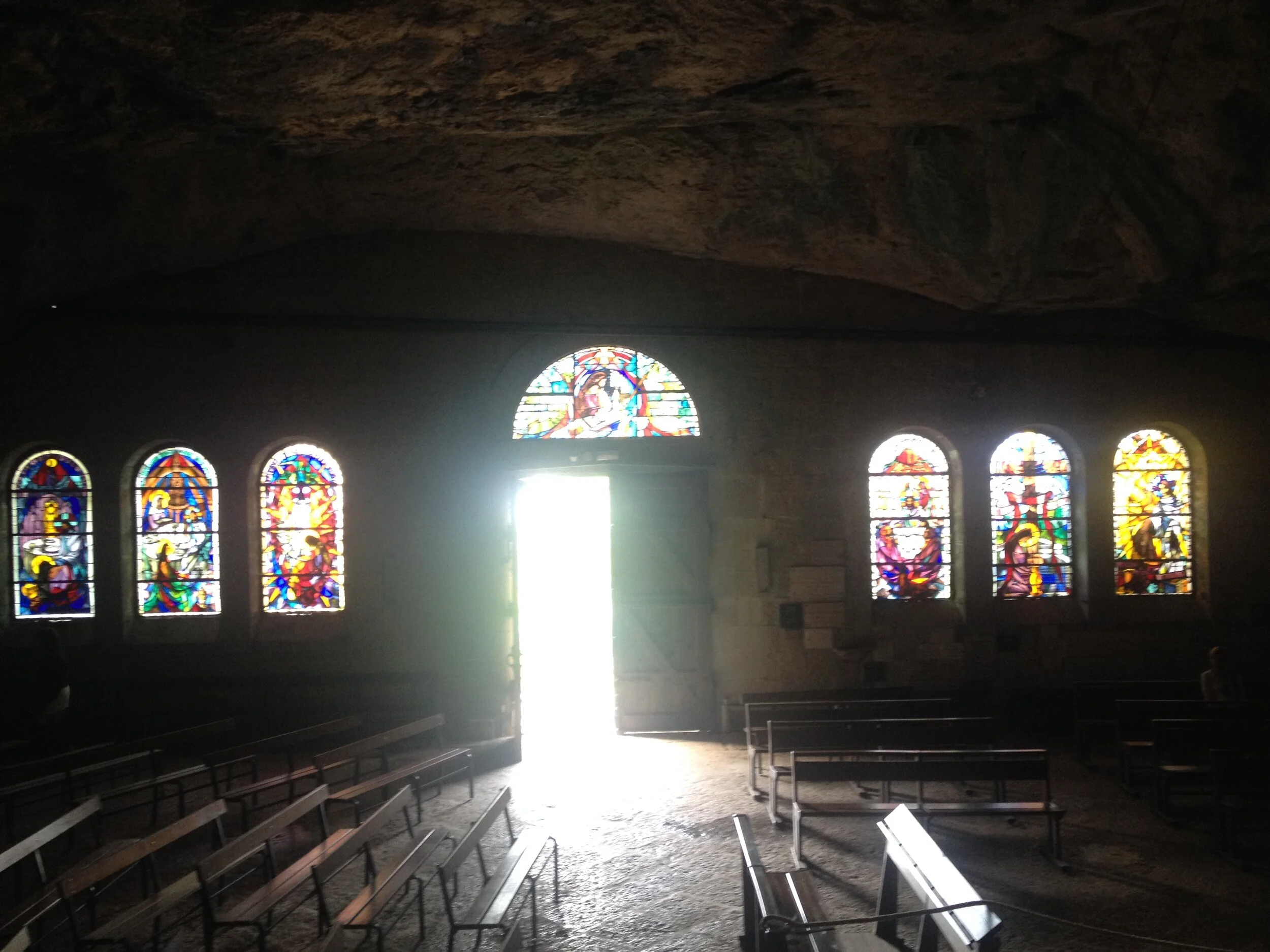
St. Maximin has at its medieval core a basilica that is seemingly basic from the outside…that is until you enter, unsuspecting, through its doors. Prepare yourself to be dazzled by the glory of its grandeur in praise of the Magdalene. Walking into the large, dark, and cavernous space, I felt as if I was entering the underworld or perhaps the womb of Mother Earth.
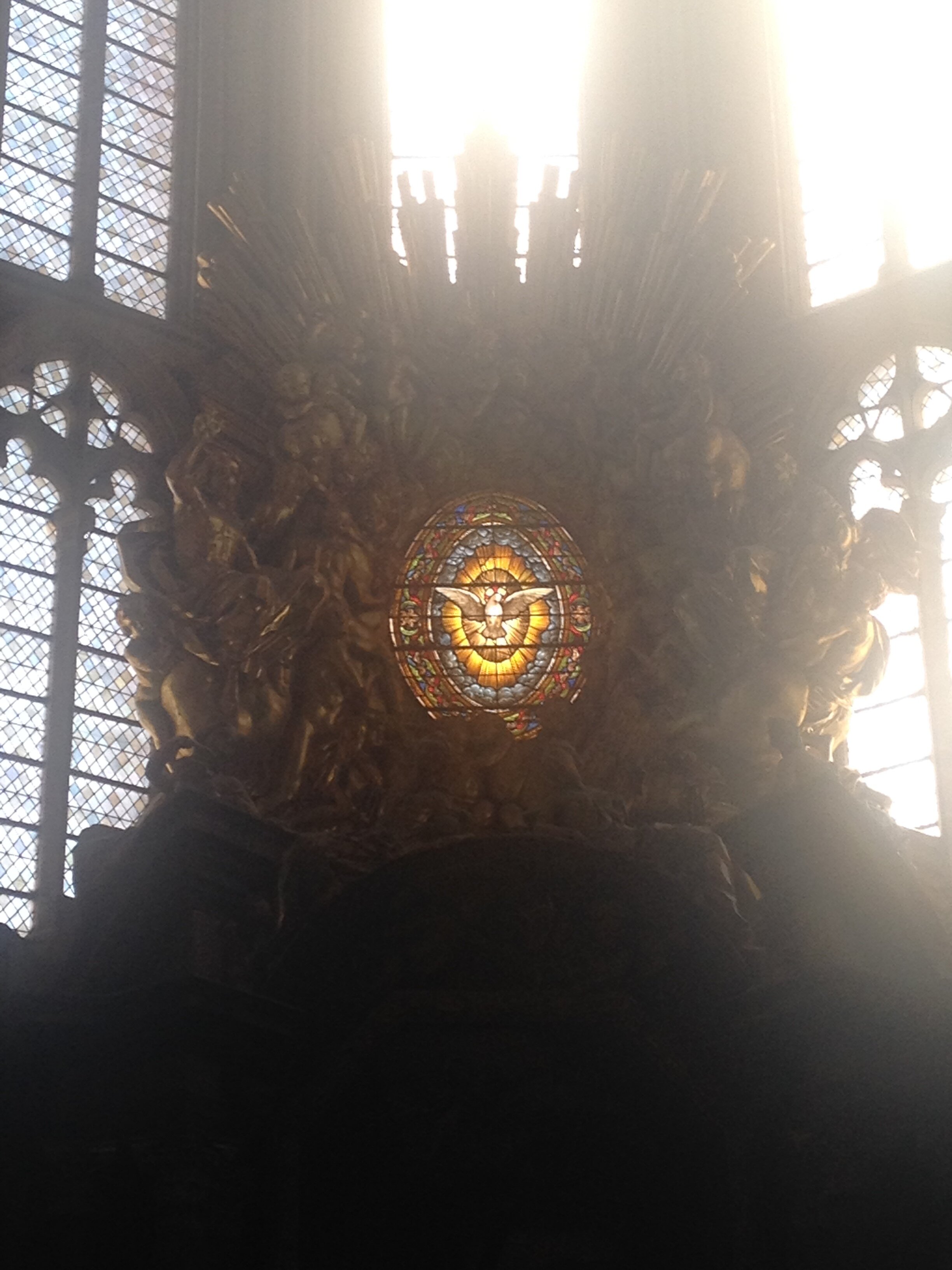
I was mesmerized by the magnificent stained glass windows at the front of the church. The rays of the sun hit the windows and illuminated the “underworld” interior of the church. As I admired the way the light from the outside world lit up the interior space, I suddenly realized why the Church constructed these sacred spaces in this fashion. These churches were built to convey such ominous darkness so that the partitioners would feel as if the priest, who stood completely illuminated by the rays of the sun, was their only hope for salvation.
AHA! I thought. The church was the first indoor theater house! They created a spectacle of heaven and hell right before the public’s eyes; complete with a psychological and spriitual sensation of purgatory.
After this realization, I found myself nearly back where I started. That is, until I turned toward the central pews, and saw it: the staircase that led to the crypt and the skull of Mary Magdalene. Touching the arch above my head, I cautiously descended the staircase, into the depths of the basilica.
The small crypt contained Christian artifacts protected by glass on all sides. Hidden behind thick glass and a golden iron gate, was the blackened skull of Mary Magdalene. It was encased in glass and adorned with stiff golden hair, and some sort of “ancient” outfit. I looked into where her eyes would have been, and thought it so strange that this skull was kept and honored in such a way. Whether it actually Mary or not, we may never know. I bowed my head in respect for Magdalene, and left the mysterious chamber.
St. Maximin and La Stainte-Baume had shared qualities that I felt drawn to: an energy; a presence; a reverence for a person who showed such love, compassion, devotion, and strength, and taught this to the world through her actions.
I left the basilica and traveled down the tiny streets of St. Maximin. On the way I passed souvenir shops, bakeries, and eye glass stores–the French love their eye glasses. I found my car and went onward for Aix-en-Provence. Before nightfall, I would be in Saintes-Maries-de-la-Mer for the annual gypsy festival honoring Saint Sara. This proved to be my biggest adventure yet!
READ NEXT BLOG: Les Saintes Maries de la Mer, Day 1
The Anointed
I awoke with excitement on my final full day at La Sainte-Baume. However, the night had not been kind to me; I had been kept up by the loud talking and banging of doors by private school teenagers, staying at the Hostellerie for an extended school field trip. After 9 PM class ended, the teens liked to play loud American music, laugh and play. The monastery had a policy . . .


FINDING MARY MAGDALENE BLOG SERIES.
“THE GROTTO OF LA SAINTE-BAUME, PART 2: THE Anointed”
Originally Published: May 29th, 2014
I awoke with excitement on my final full day at La Sainte-Baume. However, the night had not been kind to me; I had been kept up by the loud talking and banging of doors by private school teenagers, staying at the Hostellerie for an extended school field trip. After 9 PM class ended, the teens liked to play loud American music, laugh and play. The monastery had a policy of quiet hours after 10 PM, which the kids clearly didn’t observe, and I wondered why the school found it necessary to bring the kids to the Hostellerie when most did not care to be there. When, clearly, there were serious spiritual seekers longing to have a peaceful and connected experience. :)
That aside, I had a job to do. I gathered my crystals and stones, and picked a single poppy in the field for Mary, gently setting it in the folds of my scarf. As I looked up toward the cave, hidden behind a heavy mist, I wondered what Mary had in store for me.
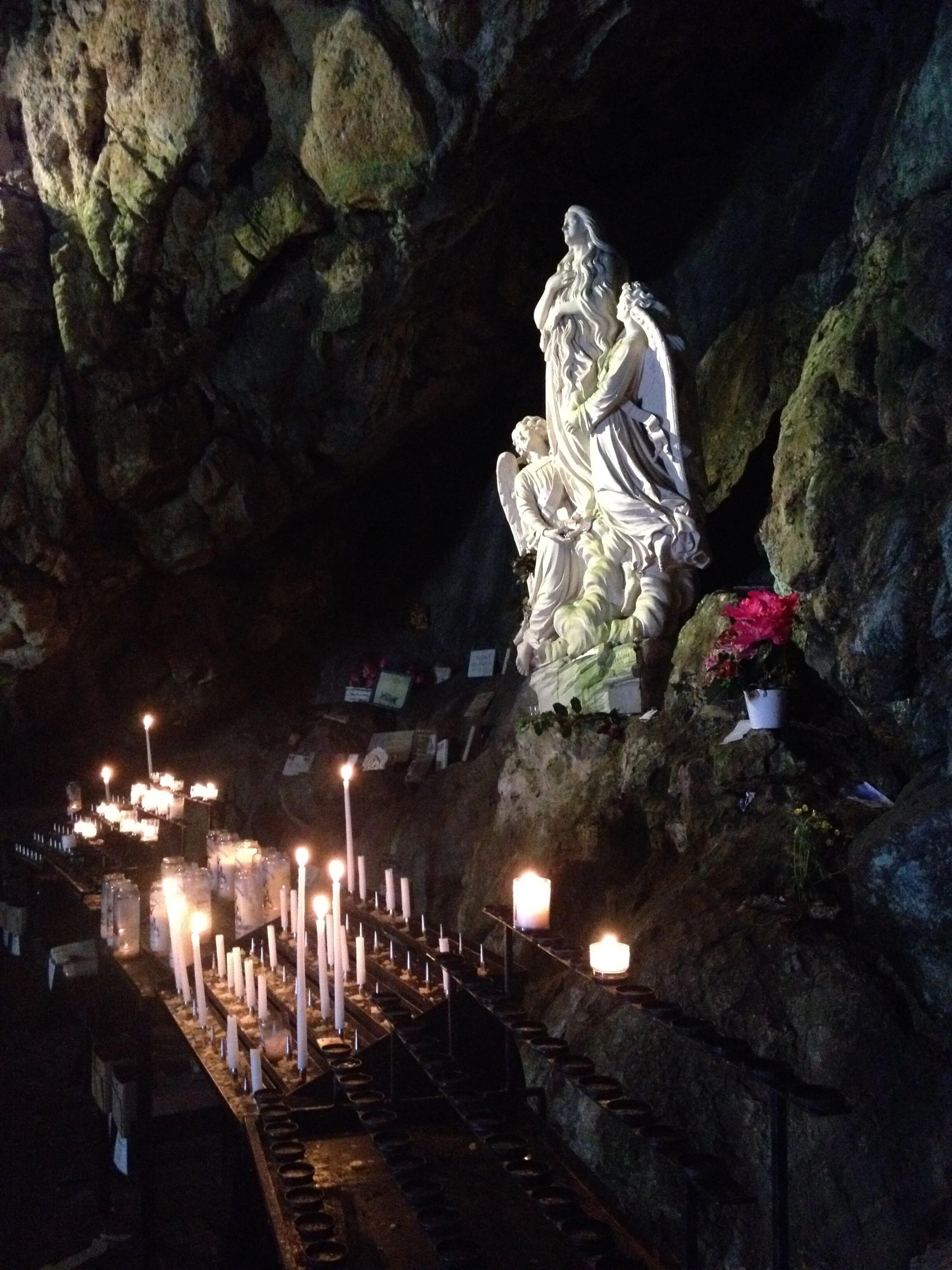
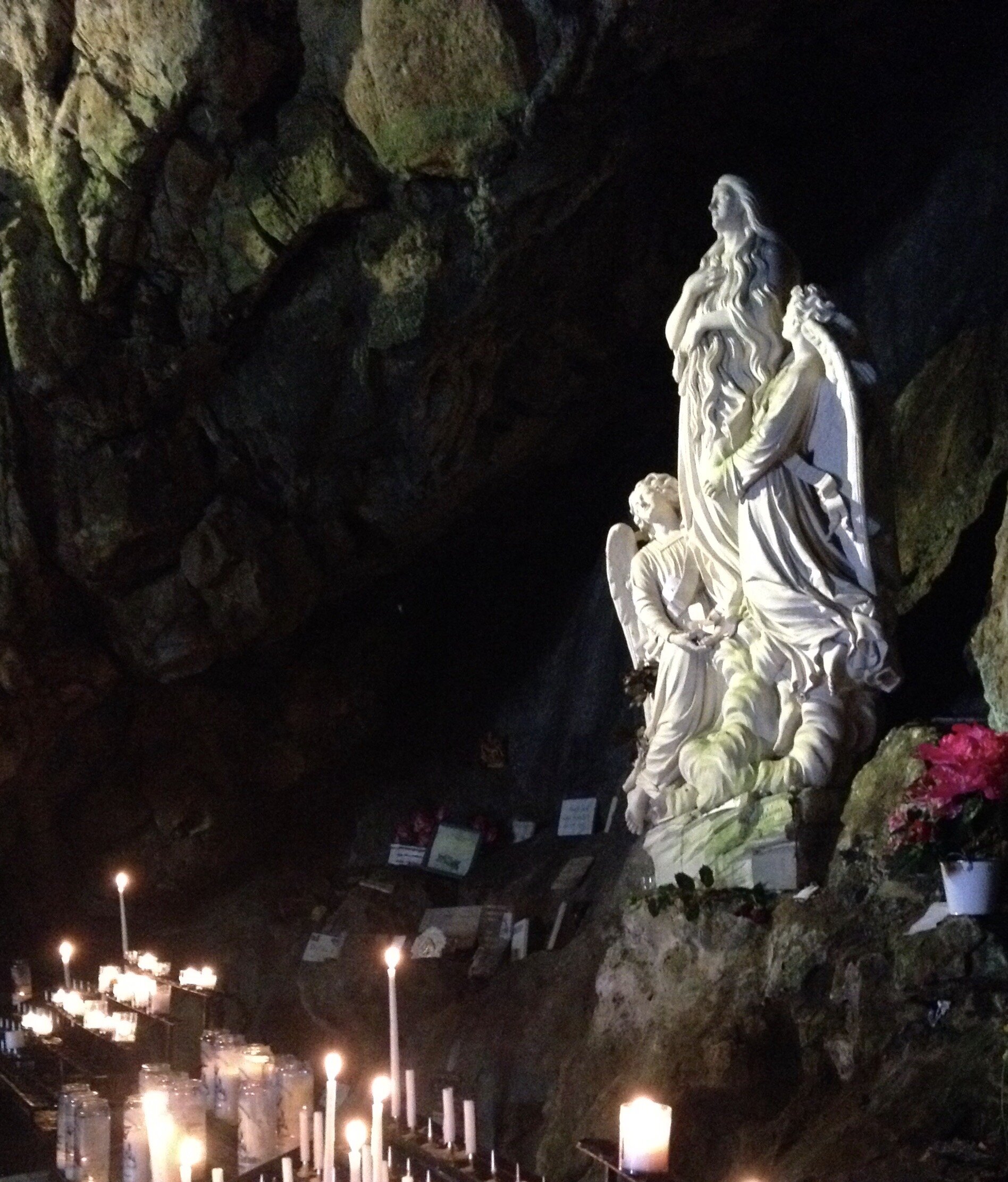
The climb was challenging. I thought maybe because I had made the trek twice the day before. Either way, I made it to the top, and again went directly to my statue of Mary. I didn’t know what I was going to do, so I allowed my intuition to lead the way. I lit a candle and set it before the statue. I took my stones - both from my home in NYC and the few I collected from the ancient forest - and ran them over the flame and then touched them to Mary, and finally myself.
I found some paper and wrote a note of gratitude to Our Lady Mary. I set it comfortably with the poppy, next to the many other notes of respect, curled up beside the statue.
Mary spoke to my heart and I knew in that moment my job was done at La Sainte-Baume. I stood up and reached over to gently touch the statue one last time, when at the exact moment my hand touched her, a drop of water fell from the cavernous ceiling, and landed directly on my third eye. “I’ve been ANOINTED!” I nearly screamed out loud. Laughing to myself, I knew Mary had given me this gift.
I prepared to descend the mountain and had a feeling of accomplishment, thinking: had this been the only site I visited in France, my pilgrimage would have been complete.
As fate had it, I was not quite done with La Sainte-Baume. At several communal meals, I had sat near a luminous woman with bright blonde hair, and one blue feather dangling from her ear. Chris was her name, and she was a Reiki practitioner and Shaman. As I was walking out the main gate leading to the cave, I saw Chris, walking-stick in hand, wrapped in a deep purple robe. We smiled and finally began a conversation. Chris spoke absolutely no English, but due to our shared passion we were able to communicate deep truths about Mary and the workings of the universe. I left Chris to have her moment with Mary knowing in my soul I had connected with my Kindred Spirit!
Later that afternoon I decided to make the hike to the cave once more, in case there was anything I missed. The atmosphere from the lingering mist gave the cave and it’s surroundings an other-worldly feel. I sat just outside the cave, happy for those last few moments.
The following morning, it was time for me to depart. I brought my books on Mary Magdalene to breakfast, in order to show them to Chris and her companion. She and I discussed our personal cosmology and healing modalities.
Jean, mother of Marie, had strongly urged me to speak to the Brothers about Mary, saying it would give me grace. Unsure, yet, wanting to follow her advice, I knew I needed to find a way to do this beyond the way of confession.
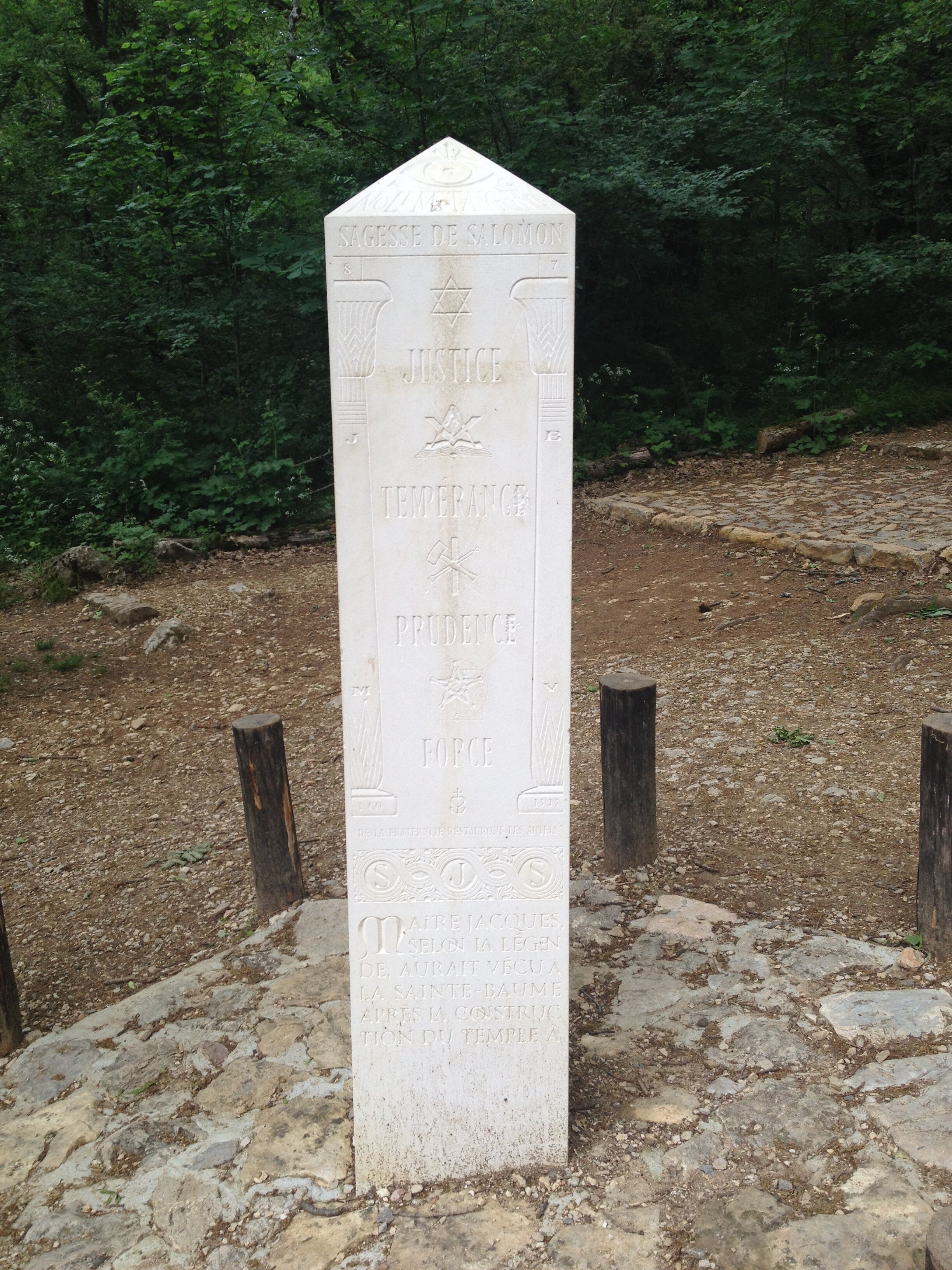
So, at the end of my stay, with my new friend Axel, we asked a Brother about a mysterious pillar at the entrance of the forest, that appears to be of Free Masonry origin. He explained that they don’t know where the pillar came from but that many people come to La Sainte-Baume for several reasons: to pray to Mother Earth, to pray to a Sacred Feminine, or to leave gratitude for the woman closest to Christ. I told him I thought that it was beautiful that they accept all people with varying beliefs at the Hostellerie. And above all, I felt, that the driving principle behind Mary Magdalene is Love. And he countered, “But what is love?” Without thought, I responded, “God. God is love.” And he told me that it is a point of research for people, to meditate and pray on the meaning of Love.
With that, I packed up and left the Hostellerie. Excited to reacquaint myself with my English-accented GPS guide, I set the route for Saint-Maximin-la-Sainte-Baume, and the supposed relics of Mary Magdalene.
END NOTE: Of course there were MANY others along this path to La Sainte-Baume that went unmentioned in my blog: Sapine, the Austrian energy worker and spiritual seeker; the three older fellows, who invited me for a drink and a conversation “en Franglais;” the two women, who taught me how to request a quiet room: “Je veux une chambre au calme;” two reiki practitioners, who critiqued how “practical France has become, to even consider using Reiki in a hospital setting is unthinkable;” Axel, the German physicist with an interest in the Magdalene legends; and the countless others, whose very presence made Mary come alive at that quiet outpost of La Sainte-Baume.
READ NEXT: The Relics of Sainte Marie Madeleine
The Pilgrimage Begins
The Legend of Mary Magdalene post crucifixion is sort of a “choose your own adventure” story. However, what is commonly held as truth, in the South of France at least, is that Mary Magdalene, along with Mary Salome and Mary Jacobe were set assail in a boat belonging to Joseph of Armithea. They were in exile, fleeing the Roman Empire, and . . .
Finding Mary Magdalene Blog Series.
“The Grotto of La Sainte-Baume, Part 1: The Pilgrimage Begins”
Originally Published: May 27, 2014
The Legend of Mary Magdalene post crucifixion is sort of a “choose your own adventure” story. However, what is commonly held as truth, in the South of France at least, is that Mary Magdalene, along with Mary Salome and Mary Jacobe were set assail in a boat belonging to Joseph of Arimathea. They were in exile, fleeing the Roman Empire, and determined to spread the message of The Way, as expressed by Jesus. Their ship landed upon the shores of what was once known as Gaul, but today is known as the Camargue region of France, in a little sea-town called Saintes-Maries-de-la-Mer.
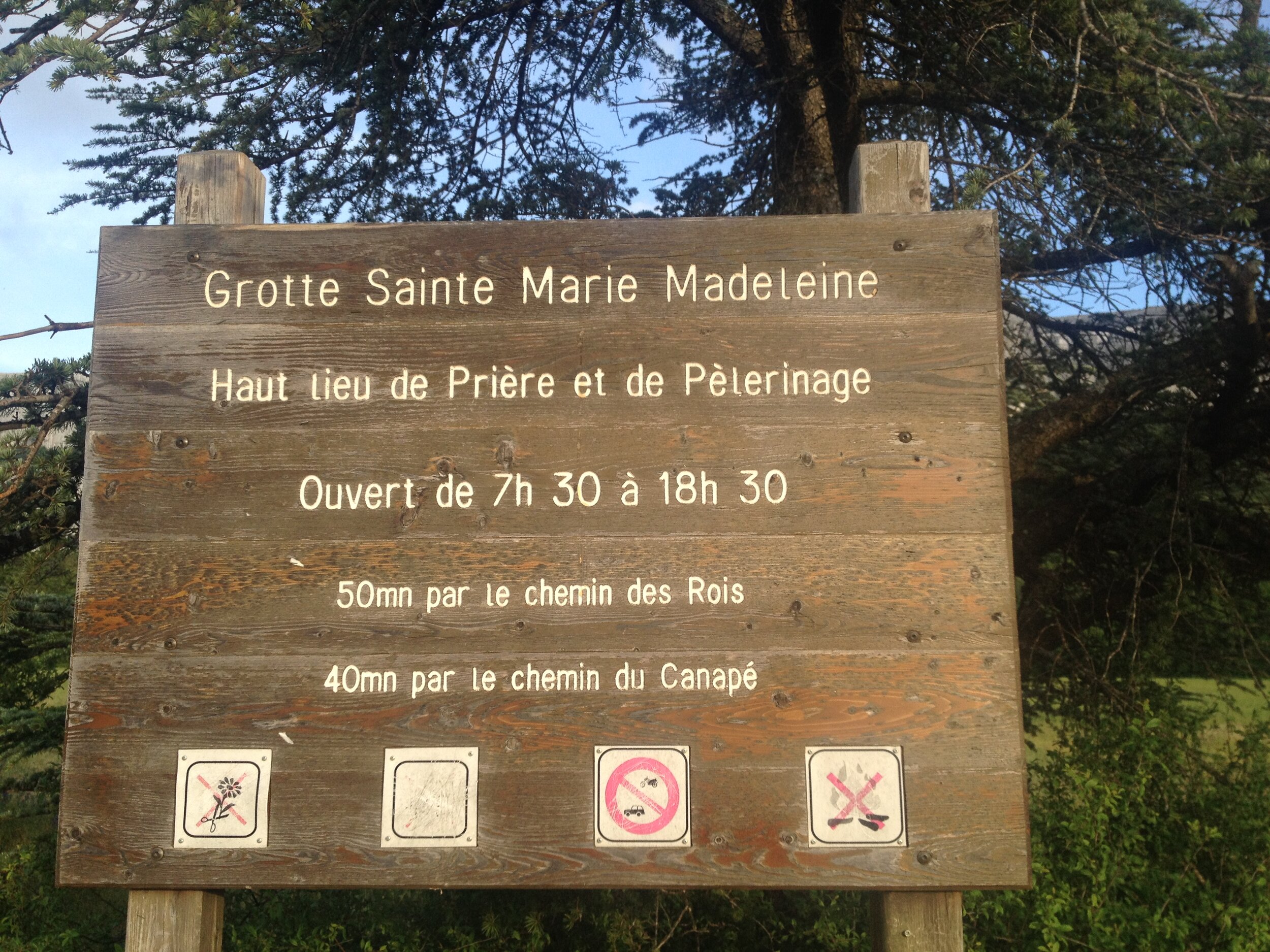
Although there are many variations on the Mary Magdalene legend throughout the region, the dominant version is that, after preaching the gospel to the inhabitants of Provence, Magdalene eventually made her way to the cave, La Sainte-Baume. There she spent thirty years in prayer and meditation, taken to the heavens by angels every hour of the day for material and spiritual sustenance. And this is where my story begins:
La Sainte-Baume is a pilgrim site at the base of Le Plan d’Aups. One must rent a car to get there, which, admittedly scared the crap out of me. For months I had been worrying about driving in France. Well, long story short, I finally made it to the Aix-en-Provence train station to pick up my car: a compact citroen diesal engine - tiny, lightweight, and non-descript. After several deep breaths, as if preparing myself for child-birth, I began my engine and took off for La Sainte-Baume.
Wanting to ease into my European driving experience, I chose to avoid the highways and instead took the back route from Aix to Saint-Maximin and then onto La Sainte-Baume. After about ten minutes, the English-accented GPS guide and I had a running joke about his constant command to “Cross the round-about.”
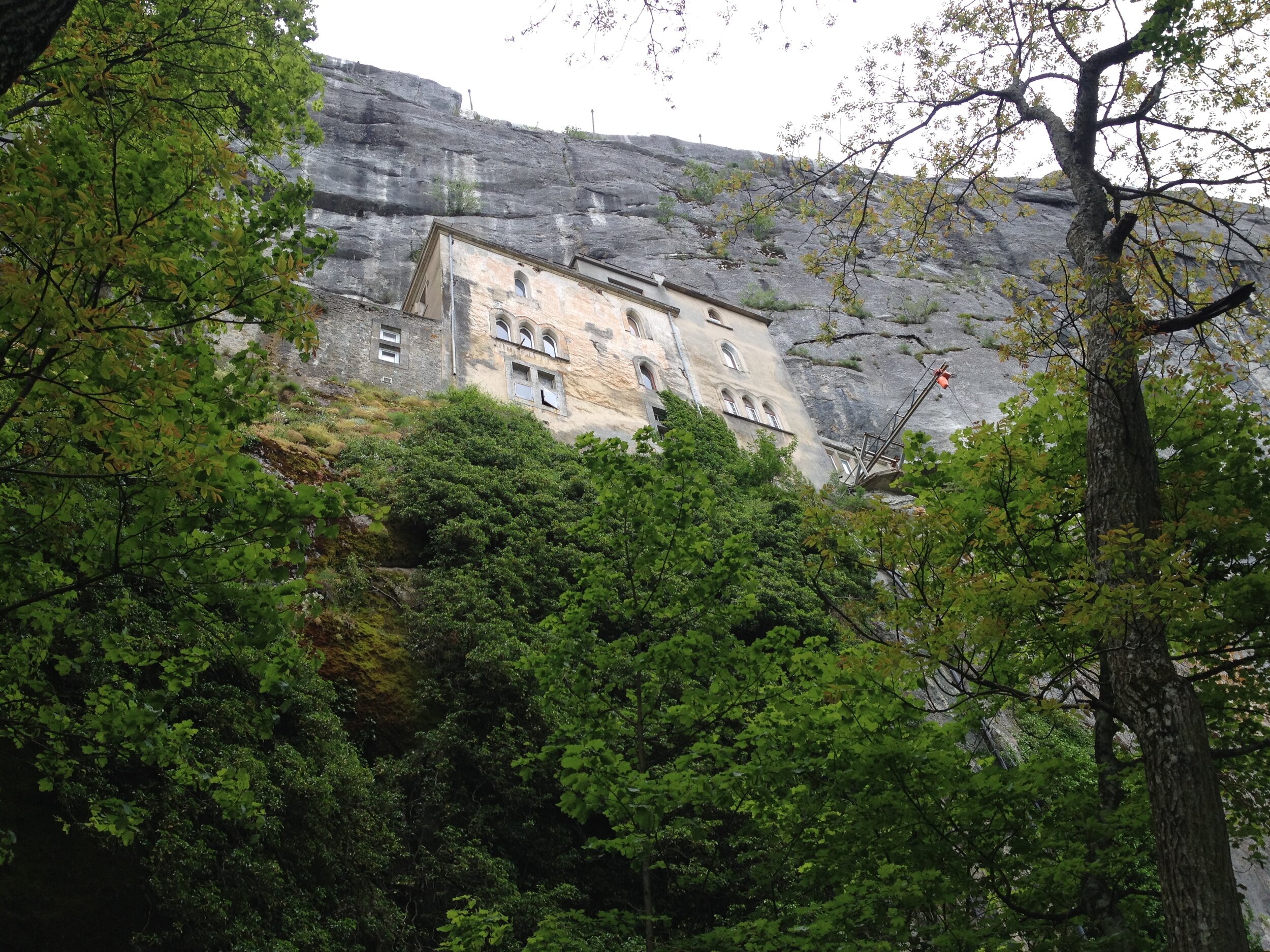
The drive to Le Plan d’Aups was stunning. I drove through vineyards and unpaved countryside roads. After climbing from Nans-les-Pins to the base of Le Plan d’Aups, on what was practically a single-lane road, I came upon it: La Hostellerie de La Sainte Baume. The Hostellerie is a functioning monastery run by the Dominican order. They hold daily mass in the Hostellerie as well as in the cave of Sainte-Baume.
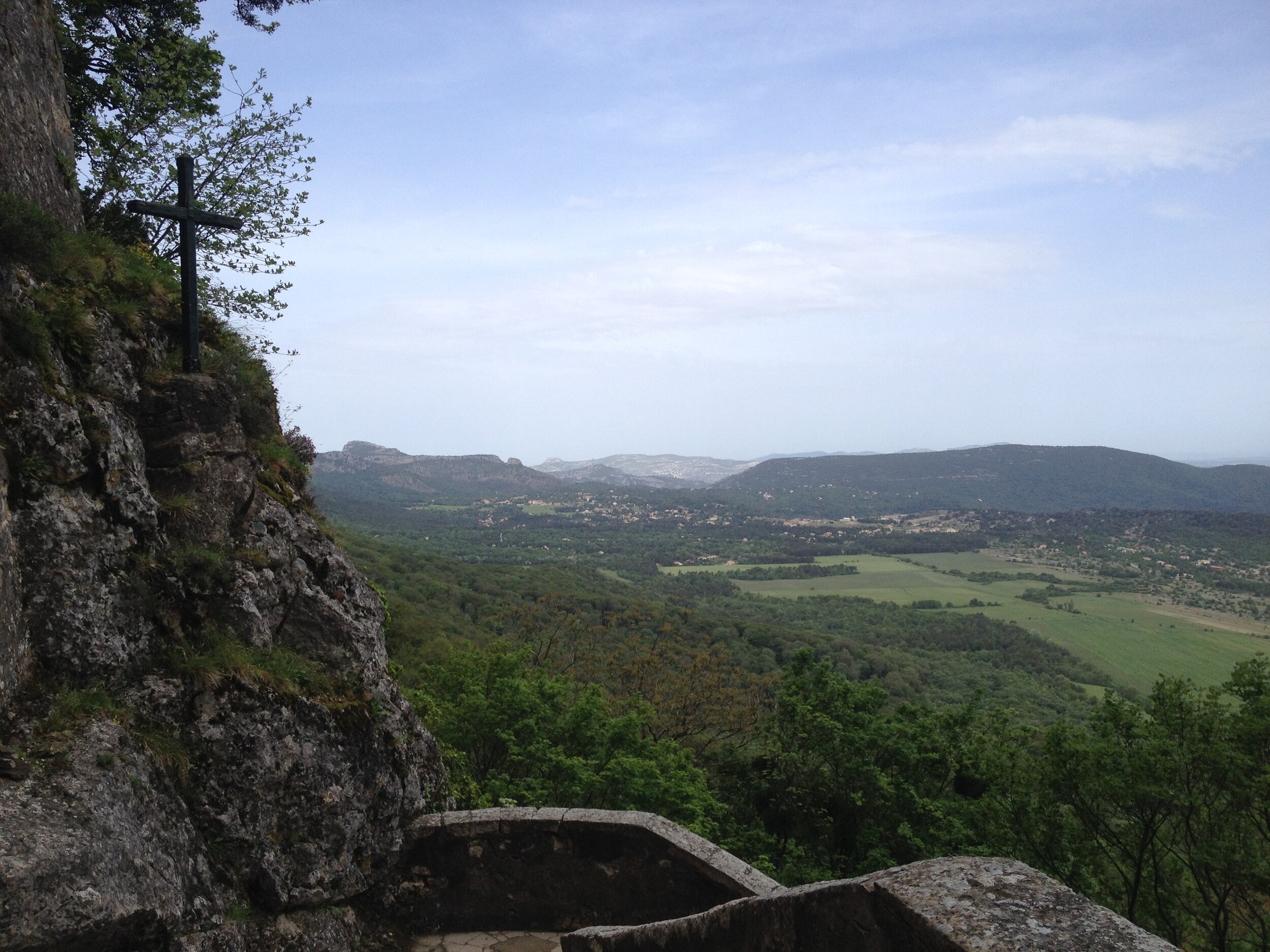
After depositing my baggage, I took a walk outside. The cave-turned-monastery lay just above the tree tops, awaiting my arrival the following day. I walked through the ancient untamed grass strewn with poppies and crickets. I felt the wind upon my face–which I was later told was coming eastward from Greece…ahhh, only a French man could make such a statement sound so romantic! I imagined Mary Magdalene walking upon this land 2,000 years ago. I slept well, knowing I was in the care of Mary.
The following day at the communal breakfast–which included a morning prayer and Sunday School songs–I met 17-year-old Marie, her mother Jean and grandmother Marie-Therese. This encounter put my French language skills to the test, as these ladies spoke almost no English. So, I braced myself, and allowed our mutual passion for Mary Magdalene guide the way.
Jean asked me why I had come all this way, by myself, to La Sainte-Baume. I told her, “For Mary Magdalene. Why? Because I love her.” Jean looked me with piercing intensity, and said, “It is because she had so much love for Jesus.” Taken aback by the simple, yet deeply resonate statement, I could do nothing but nod in sincere agreement. It was then I understood the real impact Mary Magdalene has had on her beloved followers for millennia.
I looked around the room and suddenly realized that it was full of people with a deep love and reverence for one of the most important women in Jesus’s life. Many of us had different interpretations of this love, but it was the pureness of Mary’s love–not a religious pureness, but the pure potential of unconditional love–that brought us together. And it wasn’t just me. Hundreds of people come to La Sainte-Baume every day to hike to the cave and honor her.
Marie and I climbed to the top, so deep in our conversation, alla Franglais, that I didn’t notice the challenge of the steep climb. As we reached the base of the monastery, a stillness came over us.
The potency of the Sacred Feminine was in the statues of women surrounding and grieving at the foot of the cross. A life-sized scuplture of Mother Mary holding the lifeless Jesus with Mary Magdalene weeping at his feet sits across from the entrance to the cave.
As Marie and I entered the cave, a cool dampness embraced us. I could hear the dripping of water. The haunting glow of the candles allowed the presence of Mary to become very real.
I felt drawn to the furthest most corner of the cave down at the base of the staircase. Walking in silence, I turned the corner, and saw the statue of Mary Magdalene, cross in hand, in agony over her loss. After investigating the rest of the cave, I soon returned to this corner, feeling Mary’s presence strongest there. There I remained, in prayer and gratitude, for such a woman; a woman who has been misinterpreted and debased for too long.
The four of us stayed on for 11 AM Mass. The chanting of the priests rang like bells in the cavernous space….At the end of the day, France is a Catholic country, and the Dominicans are a Catholic order. And for many of them, Mary is important because of the profound love and devotion she had for Christ. Officially, she showed this love and devotion through her act of penance, as well as for her role as the “Disciple of the Disciples,” who spread the message of Jesus throughout the region. SHE brought the message of The Light and The Way–which was synonymous with her profound love and devotion–to France.
Marie eventually asked me my beliefs concerning Christ and Mary, to which I gently explained that, for me, Jesus and Mary represent the masculine and feminine faces of God. She told me she believes that Jesus is the one and true God and that Mary was his devoted disciple. I smiled and told her that I respect all points of view and at the end of the day, it is Mary’s profound love, devotion, and strength that connects us all.
After parting ways with my companions, I had lunch, but did not feel at ease. I heard the call in my heart and knew I needed to return to Mary, in that cave, and in that moment. I practically ran up the mountain. Reaching the top, out of breath, I entered the cave and was embraced by her love. I went directly for my hidden corner and prayed and asked for guidance. As I sat in meditation, she responded, “Just listen.” I laughed to myself at this simple and often repeated advice. Then and there, I stopped asking questions and surrendered to the way she would have me go and be.
Some time later, I discovered I had missed a statue of Mary behind the Priest’s altar. Here Mary appeared to recline in a somewhat erotic manner. Many notes and flowers were left, along with engravings–the oldest of which from 1863–bearing her gratitude.
And then, suddenly, I heard it. I listened, and she spoke. She asked me to give her a ceremony the following day upon my return to the cave.
Suddenly all was well. I knew the mission I had before me. I descended the mountain light-filled with joy.
That evening was filled with laughter as I met several new pilgrims; all forcing me to express my adoration for Mary in simple, yet direct ways, allowing our shared passion to do the talking.
READ NEXT POST: “The Anointed”