GODDESS BLOG

Is it time to re-enchant the world?
Right now, I’m looking into the ancient mystery traditions. The ancient mysteries were secretive rituals. Their purpose was to give people a profound experience of the nature of existence. The central concept? Life and death are two sides of the same coin; death and birth are the same event.
We don’t really know what happened in these rituals because initiates were sworn to secrecy. And most people didn’t break this vow.
We do know that these rituals changed people to their core.
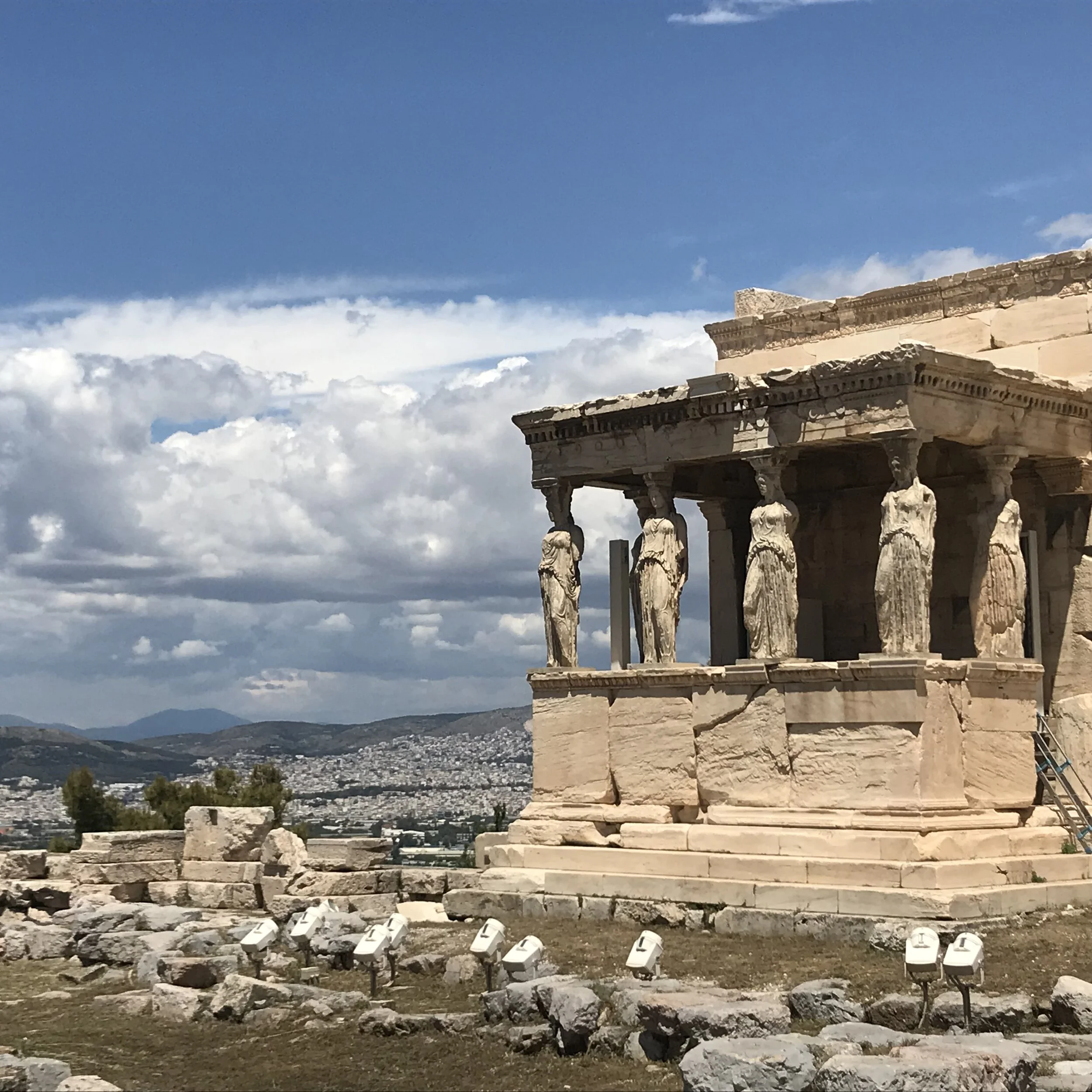
In ancient Greece, the goddesses were central to this ritual.

Villa of Mysteries, Pompeii
IN THIS NEWSLETTER:
Annalisa’s Letter
RECENT Journey to the Goddess TV Episodes
Goddess News
What I’m Reading
Feature: Women to Follow
Upcoming Interviews
DON’T FORGET . . .
Is it time to re-enchant the world?
I don’t know about you, but I have always walked through the world with a sense of enchantment.* Life lights me up.
When I lived in NYC, it wasn’t uncommon to find me wandering along my favorite streets from the East Village to the West Village while listening to the Amelie soundtrack. I do anything I can to heighten my experience of enchantment.
In these strange times, it’s been challenging to sustain a feeling of enchantment for life. But, I find that the more I stay engaged with the world of mythology, the easier it is for me to stay immersed in my sense of wonder for the world.
Right now, I’m looking into the ancient mystery traditions. The ancient mysteries were secretive rituals. Their purpose was to give people a profound experience of the nature of existence. The central concept? Life and death are two sides of the same coin; death and birth are the same event.
We don’t really know what happened in these rituals because initiates were sworn to secrecy. And most people didn’t break this vow.
We do know that these rituals changed people to their core.
In ancient Greece, the goddesses were central to this ritual. At Eleusis, the myth of Demeter and Persephone (Kore) dramatized the agricultural cycle of the grain. Demeter was the mature grain, and Kore was the maiden grain traveling into the underground every winter, only to be reborn again in the spring. Their story symbolizes the mystery of life which was revealed through the symbolism of a stalk of grain. This myth was the foundation for the Eleusinian mysteries.
Fun fact: I had the opportunity to visit Eleusis last fall. Despite its ruinous state, I stepped around the site in sheer glee, imagining what it must have been like to have experienced the Eleusinian mysteries.
Rituals that revealed the mysteries of life were an essential part of life for many of our ancestors. They gave people meaning, purpose, and a shared sense of community.
They maintained the enchantment of the world.
I question the accepted idea that time progresses in a linear direction and, with it, the idea that humanity is the most advanced it’s ever been. The reality of life is messier than that.
In fact, in Hindu traditions, time is perceived cyclically as the Yuga cycle. It is partitioned into 4 descending ages, beginning with the golden age and followed by the silver, bronze, and dark ages.
According to this millennia-old tradition, humanity is currently in the Kali Yuga (aka, the dark age). This is the densest and most challenging stage in the cycle. In this age, humanity is at its worst. Endless wars, children killing children with guns, the threat of nuclear annihilation, human trafficking, massive wealth inequality, widespread substance abuse, the mistreatment of animals and the Earth, and the threat of climate destruction exemplify the nature of the Kali Yuga.
Does this mean there is no goodness in the world? Of course not! There is goodness. And it’s growing and expanding. Many people are waking up to see the world with eyes of love and acceptance. It seems, however, that just as love expands, so does our hubris and ignorance. And our hubris and ignorance are accelerating at an incredibly dangerous rate.
The world today is in the midst of a massive existential crisis. I think it’s time to look backward as well as forward. When I look at the ancient past, I can see a world that was far from perfect but knew something about the meaning of life that we are missing today.
They were tapped into the secret mystery of life that made life worth living and preserving.
They saw the world through enchanted eyes.
My dear late friend Justin had a dream to rebuild the ancient mysteries. He felt humanity needed these mysteries for us to become better humans.
I wonder, could his vision for a loving world be realized through modern versions of these ancient mystery rituals and the re-enchantment of the world?
Let me know your thoughts!
🌺Annalisa, PhD
*Inspired in part by Chloe Valdary’s “Enchantment Theory”

Eleusis today. Picture of the sacred well Demeter sat beside during her search for Persephone-Kore. Picture by yours truly.
Recent Episodes:

Who was the real Mother Mary -- the woman behind the story of Jesus?
In her book, “Conversations with Mother Mary,” Mikki Baloy asks, “Does anyone have ownership over Mary or her story?” This question hit me like a ton of bricks. Suddenly, the Mary in my mind went from an archetypal all-compassionate, yet docile, grieving mother, to a fully formed, human woman! In Mikki’s account, Mary is fierce yet gentle, her body shows the wear and tear of a life spent working with her hands, rearing many children, and loving her husband.
Through Mikki’s account, we receive Mother Mary’s sage guidance for troubled times.
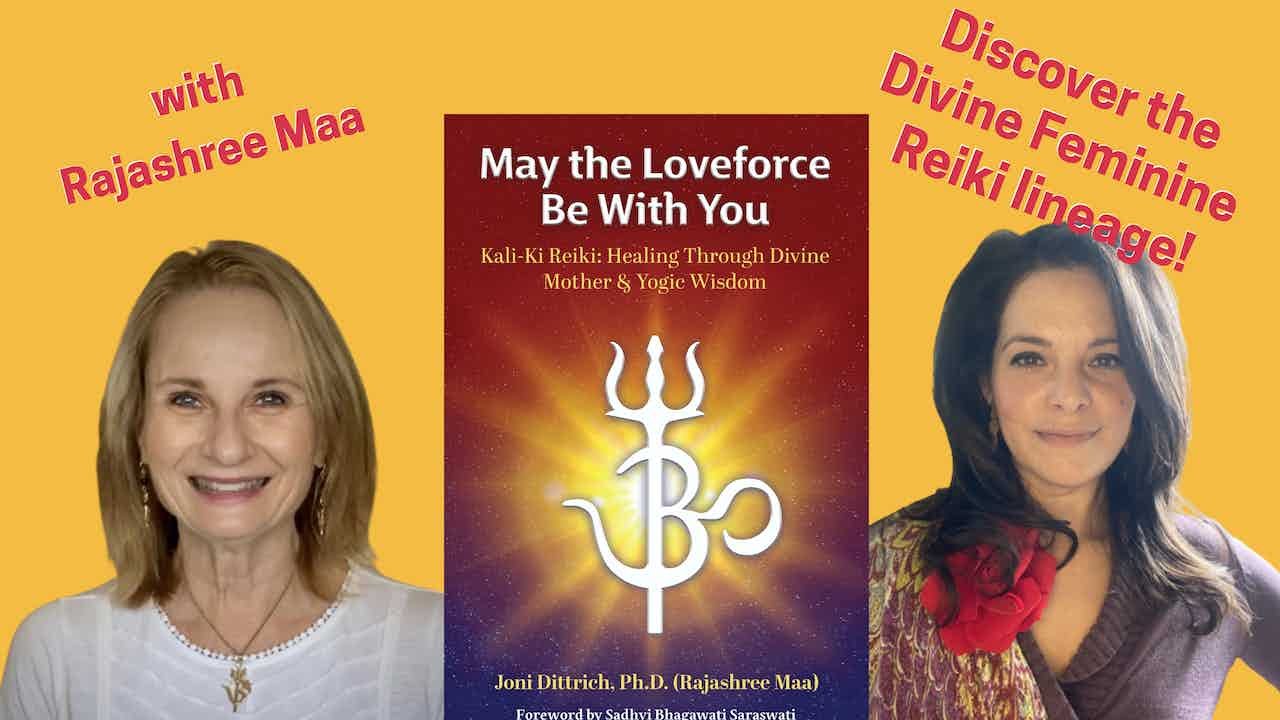
Have you ever read a book and felt a visceral energetic sensation course through your body? Almost like an energetic transmission? (This is a phenomenon called shaktipat said to happen in some Hindu lineages).
Well, for me, this is one of those times. It’s not the first time I’ve experienced a transmission from a book, but it was the most immediate and thorough.
And this time there was no mistaking the source of this energy: It was Divine Feminine energy touching my heart through Rajashree Maa’s words.
This transmission has been a gift from a true Maestra of her lineage— Kali-Ki Reiki. It was a pleasure to have Rajashree (Joan) Dittrich, PhD, on Journey to the Goddess TV to discuss Kali-Ki, the Divine Feminine Reiki lineage revealed to her by Goddess!
We discuss:
The healing power of Reiki.
Kali-Ki Reiki, the Divine Feminine Reiki lineage and how it was revealed to her.
Why Divine Feminine Reiki healing is needed now on the planet.
She guides us through an easy yet powerful Kali-Ki breathing practice.
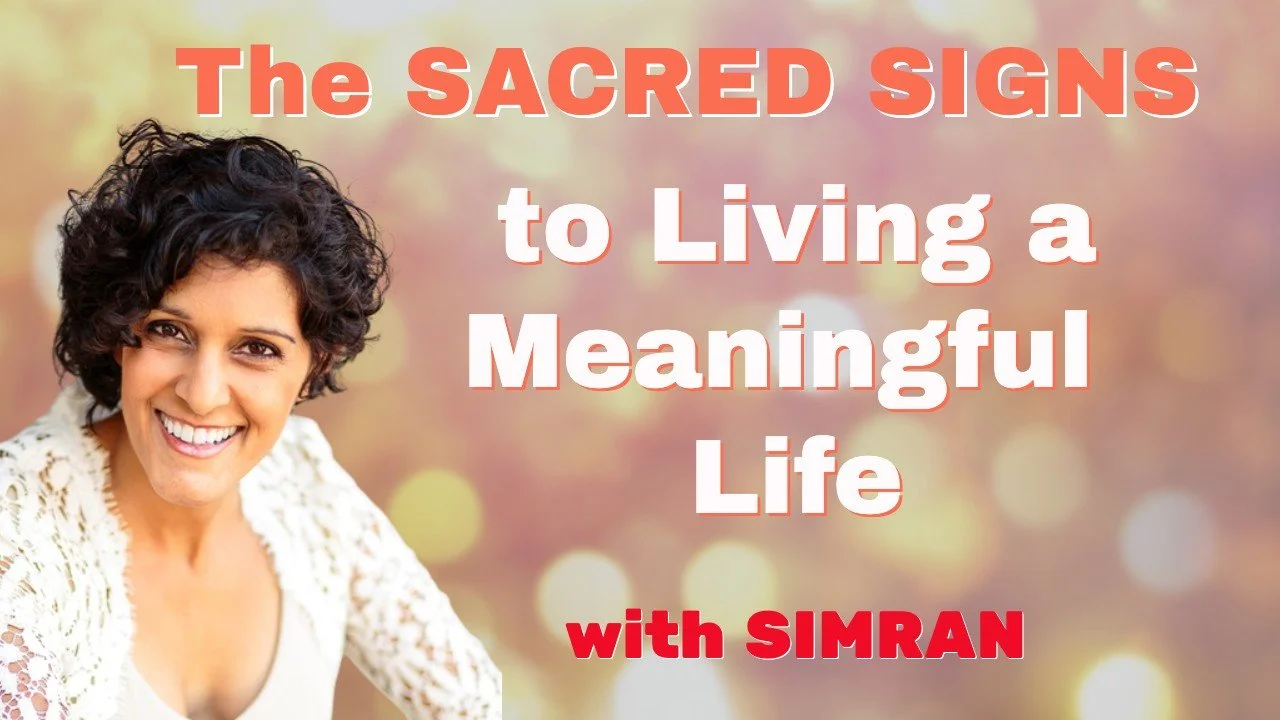
I first encountered SIMRAN’s wisdom teachings at Barnes and Nobel many years ago when it was still cool to purchase magazines.
Her 11:11 magazine changed my life. It helped me delve deeper into my newly budding spiritual path. In essence, stumbling upon 11:11 magazine was a sign that initiated me into spiritual teachings that have left an impact on my soul to this day.
I’m delighted to share my latest episode with you, a conversation with SIMRAN: “How to Uncover the Sacred Signs to Living a Meaningful Life.”
**BONUS: Simran guides us through a Sacred Signs meditation midway through the episode**
Goddess News

Details Below
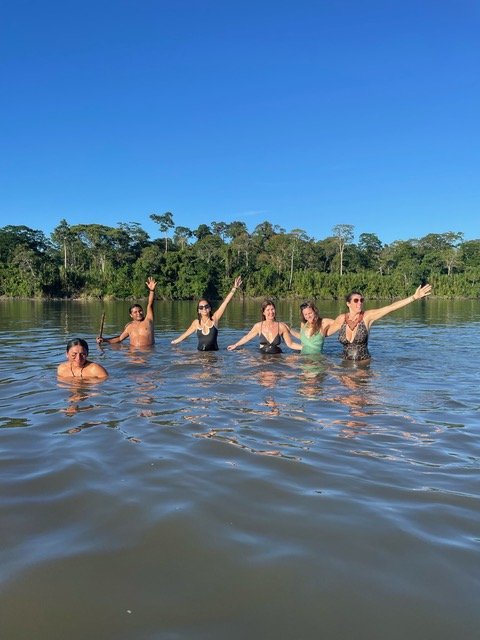
Details for July 2023 journeY @
One of the Tribe Journeys
“This magical 11-night, 12-day journey into the heart and soul of the Ecuadorian Amazon is for those who have felt the call of the wild. It’s for those who want to further explore their connection to nature, to the Earth, and to themselves. To heal and learn from the forest, the mountains, the rivers, and the indigenous wisdom keeper custodians of these lands, who generously share their deep knowledge and connection to the earth with us.
The jungle calls to you at exactly the right time, so if you are hearing the call, come!” — From Zoë

FEATURED GUEST on The Mindspace Podcast!
Host and psycholinguist, Boban Dedovic, and I discuss “The Descent of Inanna.” We look at the importance of depth psychology and meaning-making, Inanna as a myth model and an exemplar of female agency, and my unorthodox interpretation of the myth as it relates to female bodily power. Listen to our conversation here.

FEATURED GUEST on TruHealth!
I have the pleasure of sitting with Kasara D'Elene, M.A., and discussing why a return to sacred feminine consciousness matters for the well-being of women and the world! Listen to our conversation here.

Register for the 2023 Fates and Graces Mythologium conference, “Myth and the Heart.” https://mythologiumconference.com/
Mythologium Conference is July 28th - 30th, 2023
What I’m Reading
The Ancient Mysteries:
A Sourcebook of Sacred Texts
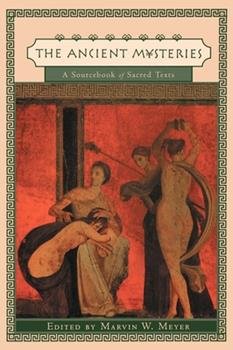
“The Ancient Mysteries”
is a great read for anyone interested in learning more about the meaning behind these ancient secret rituals. Marvin Meyer provides a very concise and easy-to-digest introduction to these sacred rites. This includes an overview of the similarities across cultures, while also providing information on the uniqueness of each tradition. It’s a great book if you want factual information about ancient mystery traditions.
Feature: Women to Follow
Enheduanna
Priestess to the moon god Nanna, poet, and the world’s first author (ca 3rd millennium BCE)

Annalisa at the “She Who Wrote” exhibit featuring the works of Enheduanna.
Pictured with the funeral attire of the infamous Mesopotamian Queen, Puabi.
Enheduanna was a priestess and the world’s first-known author who lived well over 4,000 years ago. She doesn’t have her own Instagram page, but she’s currently having her moment of mass recognition. She is the original influencer from the dawn of written history and her page is a clay tablet.
I recently attended the “She Who Wrote” exhibit at the Morgan Library in NYC and fell in great appreciation for such a powerful and visionary woman.
Enheduanna was a devotee of the great Sumerian goddess, Inanna. She composed at least three powerful poems in praise of Inanna, including the Exaltation of Inanna. She also held a position of great prestige in a culture that was slowly chipping away at women’s rights and sovereignty.
Book suggestion: “Inanna, Lady of the Largest Heart” by Betty de Shong Meador
Upcoming Interviews:

Speaker, Teacher, & Scholar and practitioner in Indigenous contemplative science.

Professor, Author, Artemis Expert & Founder of the Artemis Research Centre
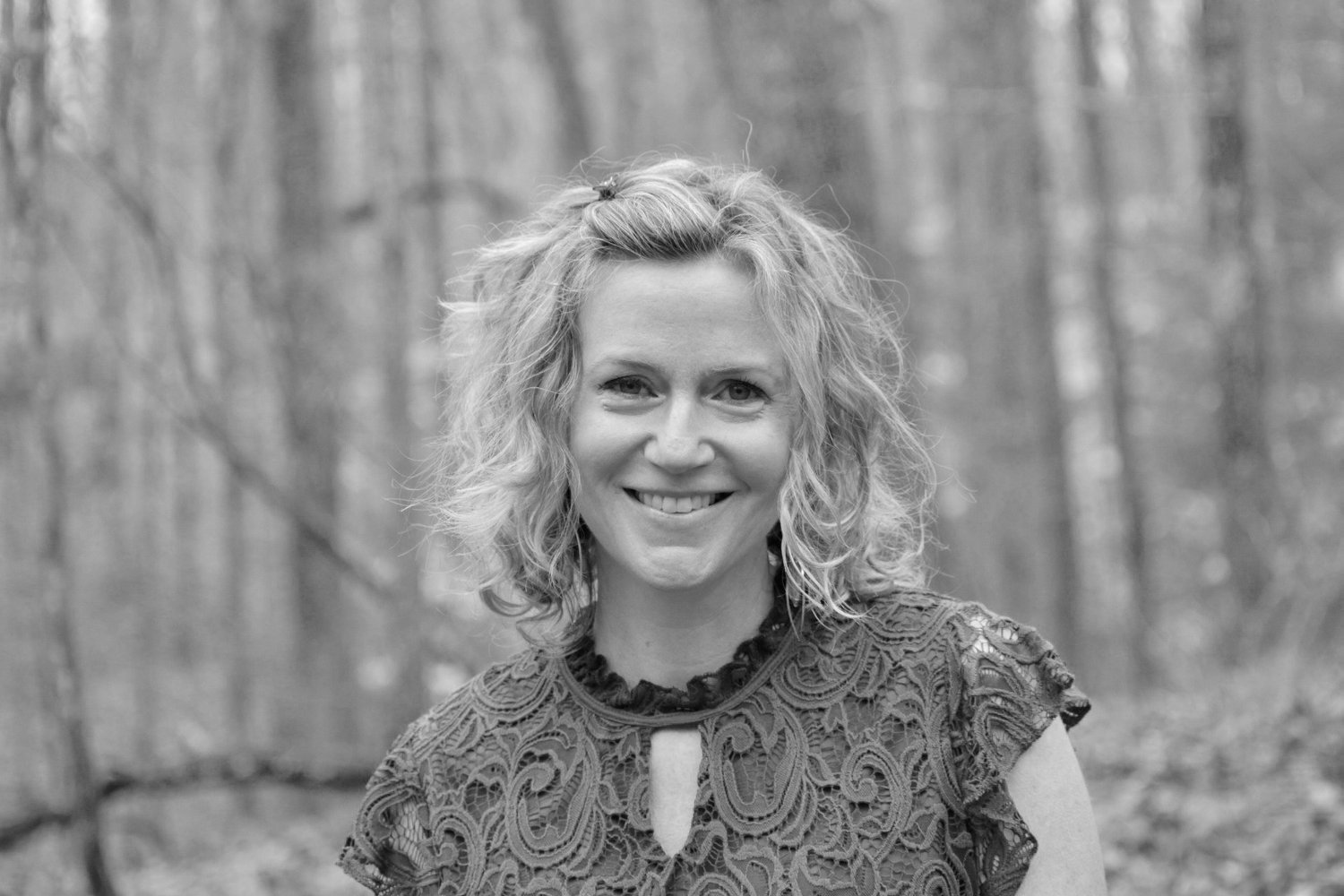
Writer, Sacred Feminine researcher and educator, community builder, initiated priestess in the 13 Moons Lineage, and the host of the Home to Her podcast.
Finding Home, a Journey Back to Myself 🌻
Finding Home, a Journey Back to Myself 🌻
One year ago today, my Godmother left her body and went home. When I got the call from her caregivers, it occurred to me that I wanted to honor her transition from life to life-after-death with a ritual. Immediately, I had the idea to decorate her body with flowers.
But, which flowers would she want me to use for this ritual? Believing that she could hear me across the veil, I asked her, “What color flower would you like me to use?” “Yellow!” I heard her exclaim with glee. Her answer caught me by surprise; I thought for certain my Godmother would have preferred purple flowers—after all, historically, purple is the color of royalty— and she was nothing less than royalty!
As it turns out, I’m glad I followed this instinct . . .
JOURNEY TO THE GODDESS

Finding Home, a Journey Back to Myself 🌻
One year ago today, my Godmother left her body and went home. When I got the call from her caregivers, it occurred to me that I wanted to honor her transition from life to life-after-death with a ritual. Immediately, I had the idea to decorate her body with flowers.
But, which flowers would she want me to use for this ritual? Believing that she could hear me across the veil, I asked her, “What color flower would you like me to use?” “Yellow!” I heard her exclaim with glee. Her answer caught me by surprise; I thought for certain my Godmother would have preferred purple flowers—after all, historically, purple is the color of royalty— and she was nothing less than royalty!
As it turns out, I’m glad I followed this instinct. Several days after my Godmother’s passing, I shared with my mother the story of how I came to choose yellow flowers for the ritual. She gasped and looked at me, surprised, before saying, “Yellow was Michele’s favorite color.”
Shortly after gathering every yellow flower I could find in the store’s paltry flower section, I arrived at my Godmother’s adult family home. For nearly an hour I decorated her head and torso with luminous, scented yellow flowers. Sweet daisies, regal roses, and gargantuan sunflowers embraced the contours of her head and shoulders, emanating a golden glow. When I placed the last rose over her heart, I stepped back and realized I had encapsulated her head in a golden flower crowned halo.
In the stillness of this moment, I was taken aback by the serene glow that was spread across her face. I knew in my heart that she had finally found peace in her final moments. I also knew that she had made it home.
🌻
Throughout much of my adult life, I have been preoccupied with finding my home, primarily driven by geographical location. While finding one’s “home” in a physical space IS important, for many wanderers and seekers such as myself, I’ve discovered that the search for “home” is actually much more complex. “Home” has deep psychological, symbolic, and spiritual meanings equally worthy of exploration. After all, “home is where the heart is.”
Several years ago, seeking advice, I shared a story with my godmother about a man in my life. With rapt attention, she waited until I was finished, pointed to my womb, and told me that the interaction occurred in that way because deep down “he recognized home.” That was the first time I truly understood that home was not just a building with four walls and a roof.
Home is relational.
Home is embodied.
Home is within me because I have a womb. Now, as I recount this story, I realize what a great honor—but also what a great responsibility—it is to have a womb, to embody “home” in such a literal and symbolic way.
Of course, the womb is not the only meaning of home.
In fact, you may have other interpretations. For example, home might be another person. It could even be a beloved pet, or perhaps a favorite tree, lake, or mountain.
For others, home is the location from which their ancestors originated.
Still, I’ve discovered that home can demarcate different life stages. For example, Seattle is my original home, the place where I was born and raised, whereas I consider New York City to be my artistic home. Pacifica Graduate Institute, the place where I received my Masters and PhD, is the home that helped me deepen into my womanhood.
These days I am completely enthralled with exploring what it means to be a woman, especially outside of enculturation. How do we, as women, find our inner home and sense of self as embodied females when society has given us inadequate definitions of “woman”?
Thus, with all of its potential meanings, the quest to find “home” may just be the most meaningful journey of a person’s life. The spiritual teacher Ram Dass was right when he said, “We’re all just walking each other home.” That is, the quest for home is the journey, the only journey each any of us is actually on.
Now it’s your turn. Search within yourself, search your heart, and let me know what home means to you.
🌻 Annalisa, PhD

In Loving Memory of Michele Chelenza
IN THIS NEWSLETTER:
Current Journey to the Goddess TV Episodes
Goddess News
What I’m Reading
Feature: In Memoriam
Upcoming Interviews
DON’T FORGET . . .
SUBSCRIBE to my YouTube channel! It’s Free!!
Consider a DONATION to Journey to the Goddess TV!
Your contribution helps Journey to the Goddess produce goddess-themed interviews with world-renown scholars, artists, and practitioners!
Latest Episodes:
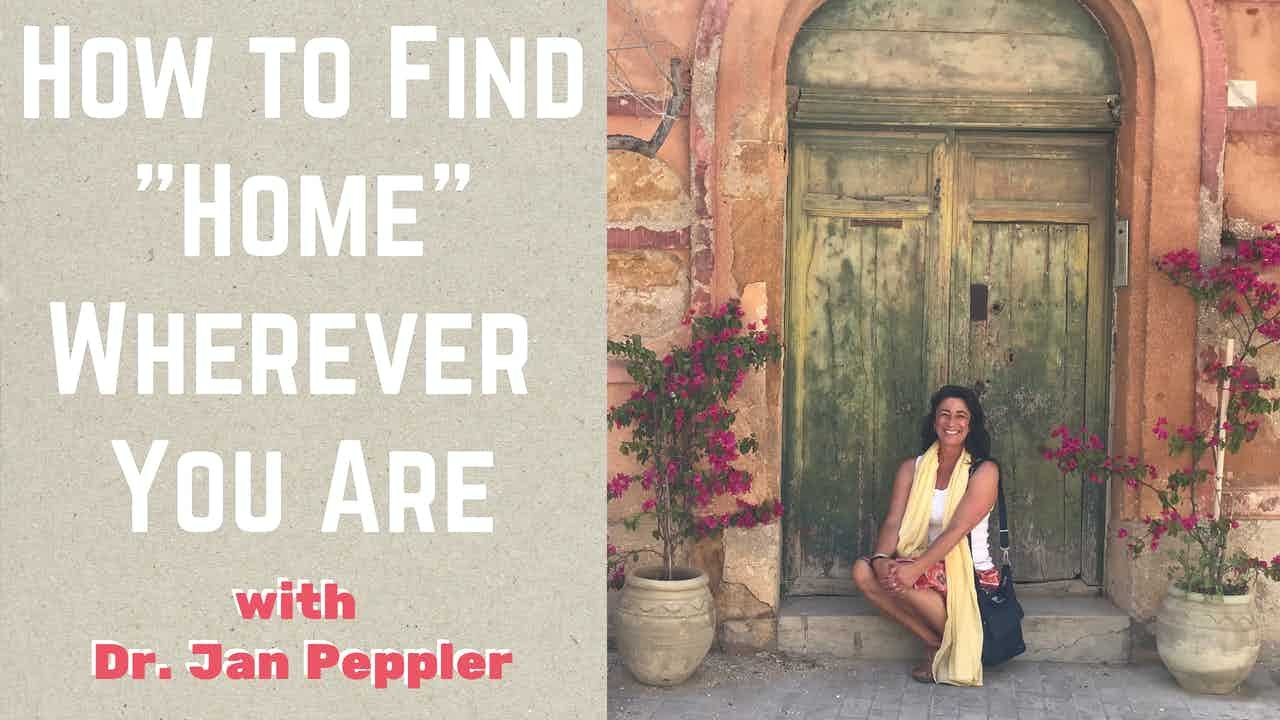
“Each of us longs for home. More than a physical space, we each desire the sense of feeling at home. But where do we find that? Why do some places feel more like home than others? How do we create home when we live far away from what feels familiar?” — Jan Peppler, PhD
Check out my conversation with Jan Peppler, PhD to learn about the psychological and archetypal underpinnings of “home” and how to feel at home wherever your are.

It’s easy for creative people to get stuck and bogged down in perfectionism and never quite get their creative visions off the ground. So how exactly can you materialize your creativity? Join me in conversation with Maia Wilde as she offers radically honest advice to those wanting to get out of their own way and take action on their creative visions!
How do myth and eco-consciousness intersect? Find out in this conversation with Fates and Graces cofounders, Dr. Stephanie Zajchowski and Dr. Joanna Gardner.
Goddess News

Featured Speaker at the Mary Magdalene Studies Association annual event. Free of charge!
When: Mary Magdalene’s Feast Day, July 22nd. 8:30am - 5:30 pm Eastern Time Zone.
Where: Live On Zoom https://us02web.zoom.us/j/87530708993
Title of Presentation: “Finding Mary Magdalene: Pilgrimage as Homecoming for the Soul” (Scheduled for 1:15pm Eastern)

Featured Speaker at Fates and Graces Mythologium
When: July 29-31st 2022.
Title: “Ecological Empathy: Grief in the Age of the Anthropocene”
Registration is open through July 25th!

In May, I was invited to speak on Maia Wilde’s podcast, “Dirt Road Less Travelled,” to discuss abortion and the recent decision by SCOTUS (draft opinion at the time) to overturn Roe v. Wade. Drawing on my doctoral research, we did a deep dive into the historicity of male-centered societies and their control of women’s reproductive bodies and how this has continued into present-day America. LISTEN to our conversation.
What I’m Reading:
“Goddess Durgā and Sacred Female Power”

This book is a great beginners guide to the history and beliefs of Shakta Tantra. Laura Amazzone combines personal narrative of her first hand account of goddess pilgrimage in Nepal with a deeply researched history of goddess worship in the Hindu and Buddhist Shakta Tantra traditions.
I was excited to learn that this tradition focuses on achieving enlightenment or liberation through the body. More specifically, in this tradition, the female body is the vehicle toward enlightenment! Needless to say, sacralizing the female body is key.
I can’t recommend this book enough to those (especially women) who want to feel empowered in their body.
Feature: In Memoriam
Pearl Means & Rosemary Ruether
Pearl Means

was a film maker, Indigenous Diné activist, and author. (Photo Credit: Mark Gerke. Posted on Native News Online).
Rosemary Ruether
was a feminist theologian, scholar, and eco-feminist. She was a prolific writer, authoring several influential books including, “Gaia and God: An Ecofeminist Theology of Earth Healing.”

This book was pivotal to my understanding of how the Christian religion has justified the domination of women and nature (both codified “feminine”) through mythologies that exalt male divine power while suppressing feminine divine power.
(Photo from: Feminismandreligion.com)
Upcoming Interviews:

Dr. Joanna Kujawa
Scholar. Spiritual Detective. Author of:
“The Other Goddess: Mary Magdalene and the Goddess of Eros and Secret Knowledge”

Dr. Megan Rose
Transformational Psychologist. Pagan Scholar. Ecospiritual Priestess. Holistic Healer. Author of:
“Normalizing the Paranormal: Helping Highly Sensitive People to validate, ground & cultivate their extraordinary gifts & experiences”
Krishna Rose
Oracle of the Grail. Prophetess. Priestess of the Magdalene. Author of:
“Woman in Red: Magdalene Speaks”
“The Other Goddess: Mary Magdalene and the Goddess of Eros and Secret Knowledge”

What you seek is seeking you 🌺 April 2022
🌺 My Journey to the Goddess began as a young teenage girl, years before I ever knew who or what the Goddess is. She first appeared to me as a ritual agreement with Pele, the Hawaiian volcano goddess; an agreement which I fulfilled over twenty years later in graduate school.
She remained with me throughout my teenage years as a passion for the red hibiscus flower. In fact, the moment I turned 18, I felt the utmost urgency to get an image of the red hibiscus tattooed on my back. It wasn’t until many years later when I realized that the Goddess was speaking to me through my love for this flower. . .

“What You Seek is Seeking You”
My Journey to the Goddess began as a young teenage girl, years before I ever knew who or what the Goddess is. She first appeared to me as a ritual agreement with Pele, the Hawaiian volcano goddess; an agreement which I fulfilled over twenty years later in graduate school.
🌺
She remained with me throughout my teenage years as a passion for the red hibiscus flower. In fact, the moment I turned 18, I felt the utmost urgency to get an image of the red hibiscus tattooed on my back. It wasn’t until many years later when I realized that the Goddess was speaking to me through my love for this flower.
🌺
Reading “Awakening Shakti” by Sally Kempton nearly 15 years later, I learned that the red hibiscus flower is the symbol for the primordial Indic (Hindu) goddess, Shakti. I recognized then that, in a very real sense, my body had been marked by the Goddess. Though my Journey to the Goddess had begun a few years prior, She had actually been with me all along. Rumi’s famous words “What you seek is seeking you” couldn’t have been more true!
🌺
As I was searching my heart for the right words to say in this newsletter today, I couldn’t help but reflect back on my journey that began all those years ago. The past few weeks have brought me closer to my vision of what it means to be in service to the Goddess. For me, it is not a journey to claim some sort of elusive “feminine energy.” Though, this is a totally legitimate path for those who want it!
🌺
Instead, my Journey to the Goddess is actually a quest to discover what it means to be a woman, outside of any patriarchal fantasy, and to share this discovery with others who seek the same. Of course, the Goddess is leading the way. The fruits of the quest have led me to the profoundity of embodied feminine power. Thus, my path to female empowerment is crystalizing in my desire to Resacralize the Female Body.
🌺
But the simple truth is, all Life is sacred. So much of the world is currently dominated by staunch materialistic and anthropocentric paradigms. As a result, the sacrality of Life—and the beauty of our interconnectivity with plant, animal, mineral life, and one another—has increasingly become diminished and distorted for centuries, if not millennia. To truly recognize Life’s sacrality, it will take a reevaluation of many of our inherited beliefs.
🌺
One of which is our notion of power and how we wield it. I believe that the power humans need to cultivate is one that is in alignment with the cyclic powers of Life—think birth, growth, decay, death, and rebirth. And it is time for more women to remember that we embody this cyclic power, as it is so profoundly made manifest, throughout our lives, in our wombs.
🌺
It is a unique and primal power that is simultaneously biological, spiritual, and archetypal. And, I believe, this power—and ALL that it implies—is the feminine power that women, and the world, have been seeking.
🌺
Perhaps Rumi’s visionary words are the antidote for our time.
🌺Annalisa, PhD
IN THIS NEWSLETTER:
Current Journey to the Goddess TV Episodes
Goddess News
What I’m Reading
Feature: Women to Follow
Upcoming Interviews
————————————————————————-
DON’T FORGET . . .
SUBSCRIBE to my YouTube channel! It’s Free!!
LATEST EPISODES
🩸Why is is that Menstruation is still such a taboo topic around the world? What is it that makes this particular form of bleeding dangerous enough to largely remain hidden behind the cultural curtain? Why do so many women feel period shame
🩸Six years ago, I began to ask myself why I was so ashamed of my menstruation and menstruous body. This has led me down a deep and often dark path filled with anger, rage, and grief, but, ultimately, has given me the opportunity to heal my shame.
🩸This is an EXPANDED presentation of my doctoral work to resacralize menstruation--but with a twist! I asked two colleagues to join me for a post-presentation "Red Roundtable" discussion. In the Q&A section, we deep dive into our blood stories, internalized sexism, the sacred power of menses & so much more!
———————————————————————————-
Is menstruation 🩸 sacred or a curse? What would you think if I said menstruation is one of the most sacred of human acts? I believe that it IS sacred and I have created a Menstrual Art Performance series to honor the sacredness of menstrual blood.
This is a Period Performance called "A Ritual Puja for Menstruation" and is followed by my commentary on the inspiration for the piece, the bleeding goddess of Assam, Kamakhya.
———————————————————————————
After an extraordinary experience with a dying cat, I decided to bring on my dear friend, podcaster, and self realization expert, Maia Wilde to discuss how connecting with my feelings of grief actually healed my body.
This conversation is lively and dives deep into the intelligence of our bodies. Maia also gives several simple and effective techniques to anyone who would like to learn how to safely tap into and experience their feelings. She also shares how to use such techniques as a vehicle for creative expression and emotional healing.
GODDESS NEWS

New!
I am happy to share the publication of “Spirit Marriage” by Dr. Megan Rose! “Spirit Marriage” is an in-depth exploration of the practice, relevance, and purpose of spirit marriage around the world. You may remember Dr. Rose from her great talk on Sacred Sexuality and Mary Magdalene for Journey to the Goddess TV. Find her book, here on Amazon today!
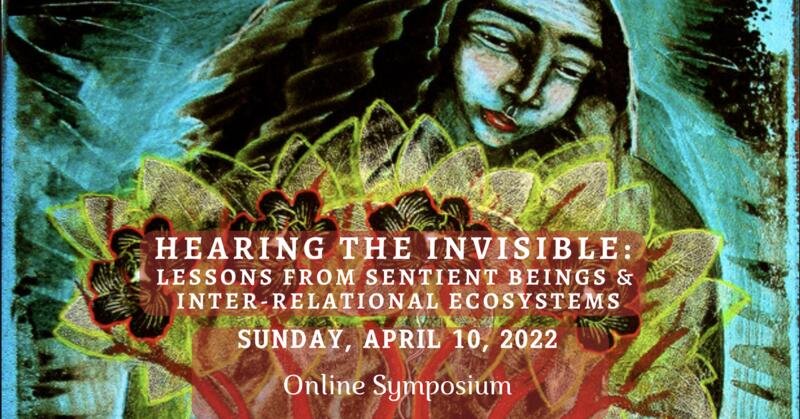
Sunday!
APRIL 10th! The Association for the Study of Women and Mythology will be holding their 2022 Symposium, “Hearing the Invisible: Lessons from the Sentient Beings & Inter-Relational Ecosystems.” For Registration, click here: ASWM SYMPOSIUM

Modern Matriarchy
“Portraits of Matriarchy: Where Grandmothers are Still in Charge.” A portrait series by KAROLIN KLÜPPEL. Featured in Yes! Magazine.
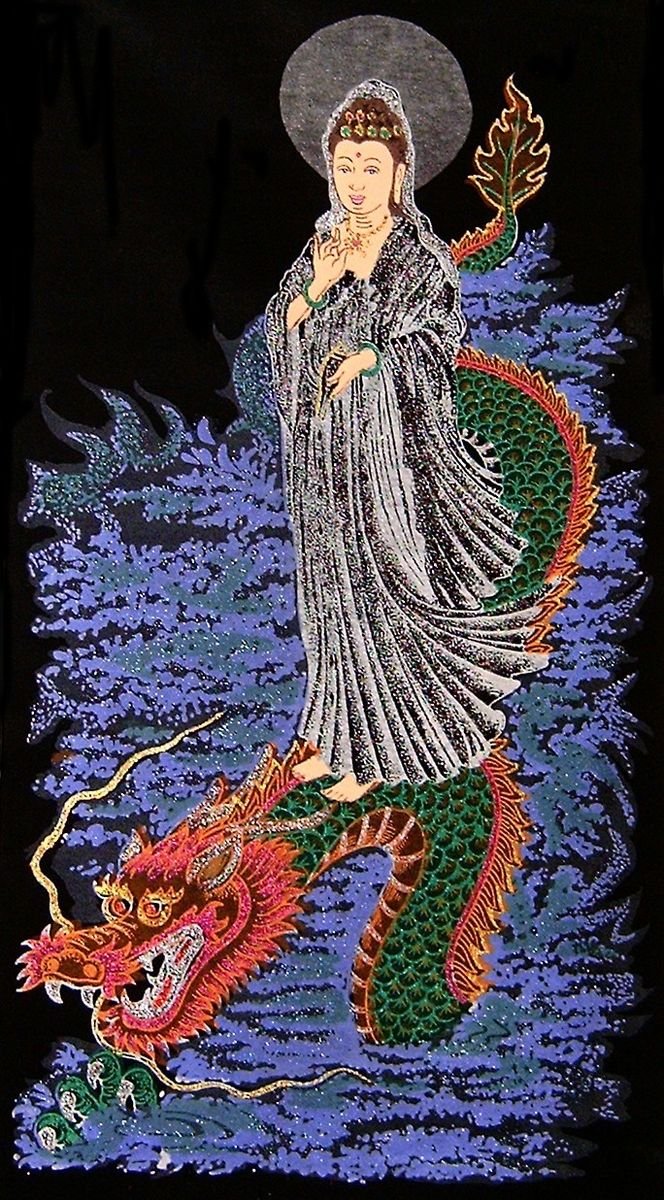
Enlightenments
Dr. Thomas Daffern (founder of the Mary Magdalene Studies Association) & Satyen Raja will be teaching: “A Course On Enlightenments, East And West:
Examples From The Past And Present, For The Future.” This course will consist of 12 online tutorials, in which they will take turns presenting role models of enlightenments. This will include sections featuring Mary Magdalene and the work of Marija Gimbutas. For more info, click here.
WHAT I’M (RE)-READING
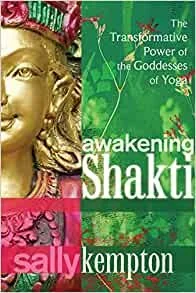
“Awakening Shakti: The Transformative Power of the Goddesses of Yoga”
by Sally Kempton
Shakti
If you’ve ever wondered what the Goddess is, then this is the book for you! Beginning with her personal narrative and an introduction to the meaning of the Goddess from the perspective of Shaiva Tantrism, Kempton takes us on a journey through the many facets of cosmic, deity, symbolic, and energetic feminine powers. Then, chapter by chapter, we learn about 11 goddesses, how to identify their archetypes, and practical how-to methods to access the goddesses’ power for our own empowerment. “Awakening Shakti” is truly one of the most thorough introductions to the
FEATURE: WOMEN TO FOLLOW

Ana Mendieta
was a Cuban-American painter, performance artist, and sculptor.
(Image: Women’n Art)
The more I learn about Ana Mendieta, the more I fall deeply in love with her unapologetic artistic vision and commitment to laying bare the profundity of embodied female power and its interwoven connection with the Earth and other spiritual elements.
Ana used her body as a vehicle of art and often in site-specific, natural settings. For example, in her Esculturas Rupestres series, including works such as Guacar or “Our Menstruation,” Ana carves locally worshipped goddesses into caves outside Havana. These carvings evoke symbolic and existential meanings about female power and embodiment.
In a way, I see myself and my own work with embodied menstrual rituals and retellings of goddess myths, within the artistic lineage so fully explored by Ana as well as other artists like Judy Chicago.
In 1985, Ana died in a tragic incident, that, some say, exemplifies the themes she so powerfully evoked in her art. Ana lives on through her art, which continues to inspire many artists and non-artists alike.
Learn more about Ana Mendieta here.
UPCOMING INTERVIEWS
April 2022
Co-founders of Fates and Graces Mythologium, Dr. Stephanie Zajchowski & Dr. Joanna Gardner, will join me for a special Earth Day discussion on the intersection of myth and ecological consciousness.
Dancing in the Dark - December 2021
Happy solstice, friends! Over the past few days, I’ve been reflecting on the Winter Solstice and the inevitable dance between dark and light.
I recognize my own resistance to prolonged darkness, cold, and the slowdown the winter season not only encourages, but simply requires of me.
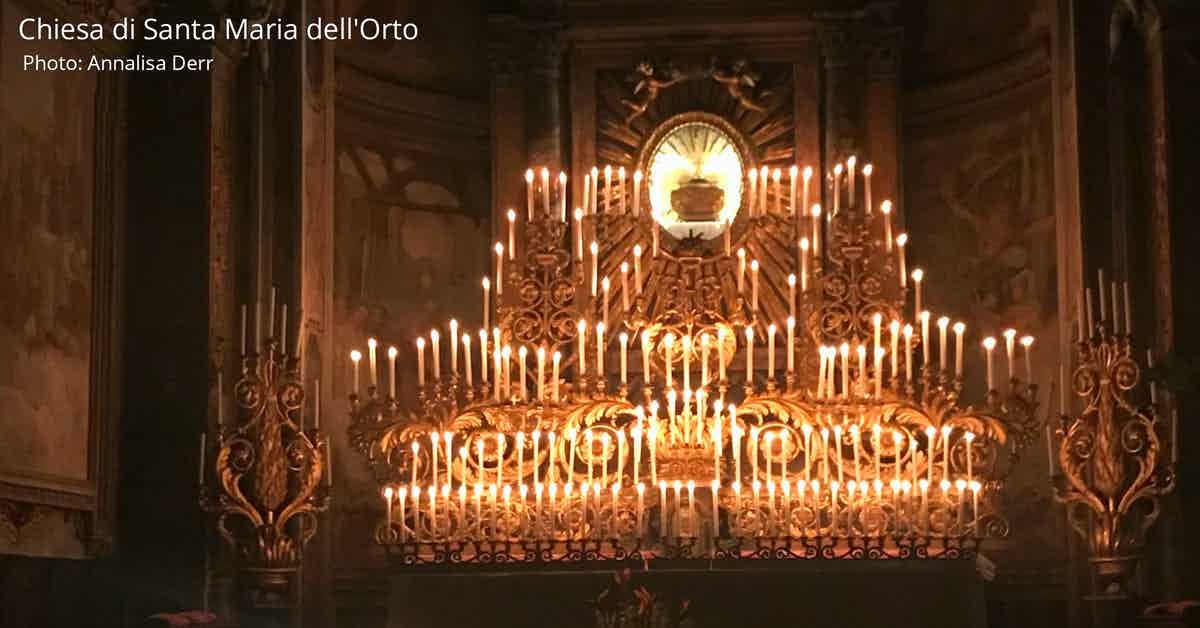
My mind’s eye continues to return to the image of a candle flame illuminating the darkness. Such as in the above image, which is a picture I took at the Church of Santa Maria dell’Orto in Rome during Easter Holy Week 2019.
In some traditions, the candle flame represents the soul as an individual emanation of the Divine. Meditation on such an image reminds me that the candle flame is brightest, strongest, and most beautiful when dancing in the dark. And more so still when the candle flame burns bright among a sea of likeminded flames.
It reminds me that no matter how dismayed I may be by the state of the world, I am surrounded by so many luminous souls who are each doing their part to—in the words of a dear friend—“be a part of the healing of this world”.
That brings me to the many illuminating conversations I have had the great pleasure to facilitate on Journey to the Goddess TV. This year. . .

Dancing in the Dark
Happy solstice, friends! Over the past few days, I’ve been reflecting on the Winter Solstice and the inevitable dance between dark and light.
I recognize my own resistance to prolonged darkness, cold, and the slowdown the winter season not only encourages, but simply requires of me.
My mind’s eye continues to return to the image of a candle flame illuminating the darkness. Such as in the above image, which is a picture I took at the Church of Santa Maria dell’Orto in Rome during Easter Holy Week 2019.
In some traditions, the candle flame represents the soul as an individual emanation of the Divine. Meditation on such an image reminds me that the candle flame is brightest, strongest, and most beautiful when dancing in the dark. And more so still when the candle flame burns bright among a sea of likeminded flames.
It reminds me that no matter how dismayed I may be by the state of the world, I am surrounded by so many luminous souls who are each doing their part to—in the words of a dear friend—“be a part of the healing of this world”.
That brings me to the many illuminating conversations I have had the great pleasure to facilitate on Journey to the Goddess TV. This year I spoke with activists, authors, dancers, scholars, and artists on a wide variety of Goddess-related topics. Some of these women include: Artist Lisa Levart and the debut of her Goddess on Earth Oracle deck (including my portrayal of Mary Magdalene); Indian classical dancer and Success Coach for women leaders, Dr. Vena Ramphal on the Yoga of Dance; as well as my Everyday Goddess collaboration with activist and soon-to-be-author, Natasha Thomas.
Most recently, I was honored to have eco-activist, Zoë Tryon, join me live from the Ecuadorian Amazon, where she works as a cultural liaison with a handful of Amazonian communities, helping them fight international corporate corruption and ecological devastation of their territories.
I am blessed to have such incredible women who inspire and uplift me on my show. Each of their lights shine bright.
Where do you find meaning and beauty in the dance between the light and the dark?
🌺 Annalisa, PhD
P.S. Every year I also aim to support and amplify a woman-centered organization. This year it is: WomenSpirit Coalition: Sta’ni Shay’i, or Washington State Native American Coalition Against Domestic Violence and Sexual Assault. Because of many complex issues of colonialism, racism, sexism, treaty violation, environmental degradation, and geopolitics, Indigenous women around the world are one of the most vulnerable human populations on Earth. This is not because they are weak—quite the contrary—instead, it is more often because so many Indigenous women are on the front lines, willing to put their lives on the line, fighting for ecological, community, and personal justice.
For more info: Native Hope, Native Women’s Association of Canada, A Modern Trail of Tears.
IN THIS NEWSLETTER:
Recent Journey to the Goddess TV Episodes
What I’m Reading
Feature: In Memoriam
Upcoming Interviews
DON’T FORGET . . .
Have you SUBSCRIBED to my YouTube channel yet? It’s Free!!
Become a Journey to the Goddess member on Patreon! Benefits include behind-the-scenes access, goddess gifts, and more!
Latest Episodes:
I’m excited to feature my conversation, “Entering the Heart of the Amazonian Womb” with eco-activist, #ZoëTryon. Join me for this riveting and timely conversation where we discuss:
🌳 What #ecoactivism is and how it is rooted in Divine Feminine / Goddess consciousness.
🌳 Some of the indigenous women on the front lines to save their communities (and by extension, the whole world), from corporation lead environmental devastation.
🌳 The fight to hold oil companies such as Chevron accountable to ecologically restore the #AmazonRainforest and its communities.
🌳 The best ways to support Indigenous communities
🌳 What each of us as individuals can do to be a part of the solution.
In “Regent Women Powerfully Stepping into Midlife”, Dr. Andrea Slominski and I dive deep into the #REGENT archetype. This emerging archetype encompasses the #spiritual, psychological, biological and cultural significance of women’s midlife. In particular, Dr. A reframes and affirms peri-menopause, #menopause, and post-menopause as a time for women to step most fully into their own. In other words, aging is a woman’s superpower.
What I’m Reading

I know, I know…I am probably a little late to the party on this one. After learning I had not yet read “The Red Tent”, my friend Toni insisted that I read it. “The Red Tent” is a remythologzation of the Genesis story of sisters Rachel and Leah, as told by Leah’s daughter, Dinah. If you’ve ever read this story in Genesis, like me, you may have felt heartbroken by the rivalry depicted between the two women. This re-imagining remedies this rift and offers a nuanced, affirmative (albeit sometimes challenging) perspective on life, love, and sisterhood.
Feature: In Memoriam

(Image by: Liza Matthews on lionsroar.com)
bell hooks
Feminist scholar, author, activist, and professor.
bell hooks—a feminist scholar and author, an activist, and a professor—transitioned on December 15th, 2021. Though I have only encountered bell hooks’ work through the works of other feminists, I have long admired her from afar.
Her impact on feminism and feminists, women and men, is undeniable and palpable.
Of the many bell hooks quotes I’ve seen posted to social media platforms since her death, this is by far my favorite:
“The one person who will never leave us, whom we will never lose, is ourself. Learning to love our female selves is where our search for love must begin.”
🌺 Goddess Blessings on your journey, bell.
About bell hooks: bell hooks Institute
A few of her more well known books:
Upcoming Interviews:

Dr. Lisa Skura
Speaking on “The Feminine in the Tarot”
June 2021 Newsletter
You know what I love? Birthdays. And last Sunday was my 38th birthday. I’m an inclusive birthday celebrator and believe everyone should be celebrated on their special day. On my birthdays, I insist on doing something unique to thoroughly mark the occasion as extraordinarily memorable.

A Celebratory Birthday Ritual to Honor My Motherlines
You know what I love? Birthdays. And last Sunday was my 38th birthday. I’m an inclusive birthday celebrator and believe everyone should be celebrated on their special day. On my birthdays, I insist on doing something unique to thoroughly mark the occasion as extraordinarily memorable.
Intriguingly, this way of birthday celebrating is similar to the original meaning of taboo. In Polynesian, the word is actually “tapu,” which means “to mark thoroughly”. Even though today we talk about taboo in negative terms, its original meaning is a simple, but purposeful, recognition of something (or someone) that is out of the ordinary from day to day life.
So, given the unpredictable circumstances of this year, I challenged myself to come up with plans that would be flexible, adaptable, and thoroughly remarkable. Knowing that distance travel would not be the best option, I turned inward to see what I could do close to home. Then, it came to me. For nearly 25 years, I have been having the same recurring dream: I am traveling down a winding, wooded road on Friday Harbor, WA. I am searching for the house my maternal grandparents built and lived in when I was a child; a place that holds many happy memories. I keep searching, but never find it.
Friday Harbor is an island off the mainland of Washington state and is a gigantic stone’s throw away from the southern tip of Vancouver Island, Canada. Just as my grandparents were preparing to move off the island, my grandmother was diagnosed with breast cancer and died not too long afterward. I am not sure if she ever lived in her new house. Something about my reoccurring dream, and my childhood memory of her during that time in my life, seems to have been telling me that she never left and has remained there on Friday Harbor, waiting for me.
Neither my mother nor myself have been to the island since my grandmother died. Remembering this dream, I suddenly realized that the most memorable thing I could do for my birthday would be to travel to Friday Harbor with my mom and perform a ritual together to celebrate my grandmother, as well as the other women up my Motherline who made my life possible.
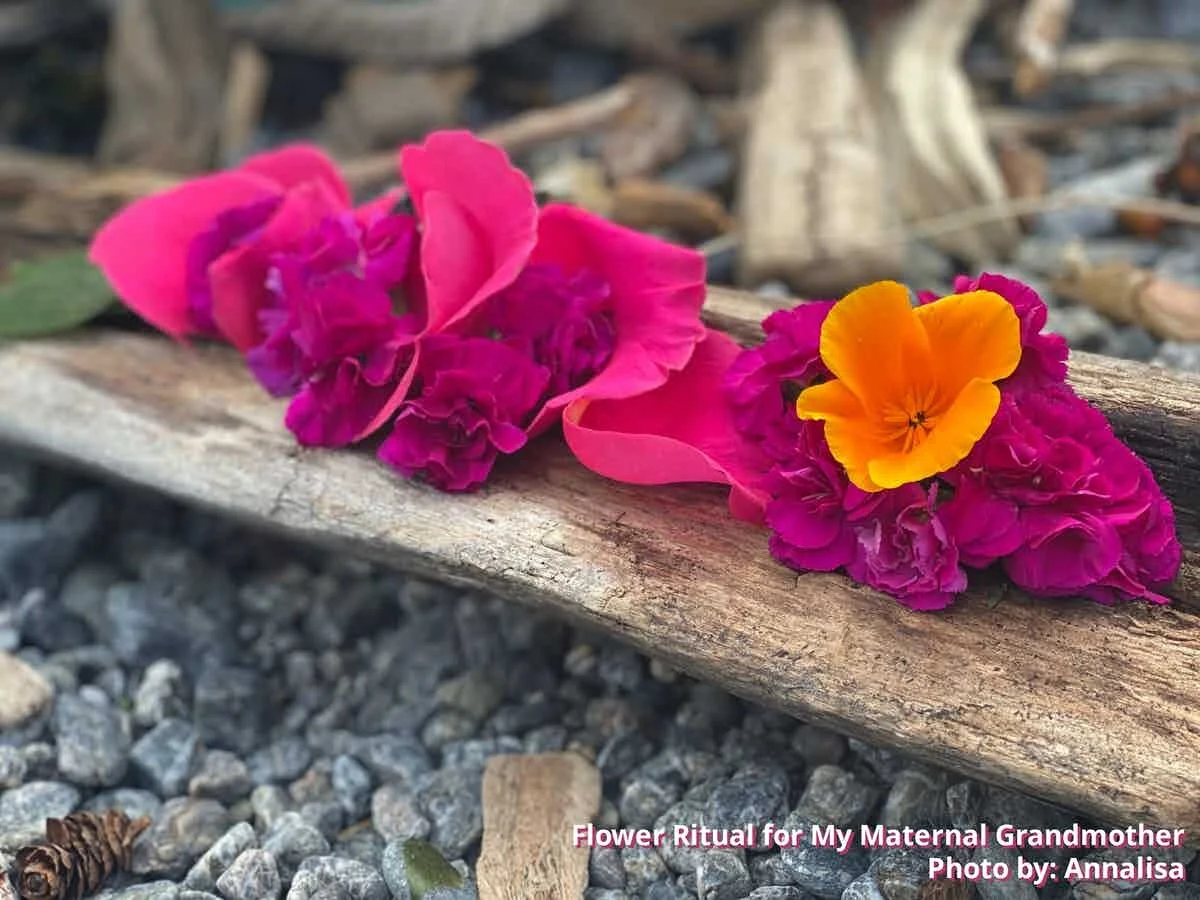
This is exactly what we did. After locating my grandmother’s favorite beach, I searched for the perfect piece of drift wood and decorated it with flowers in hues of red, pink and orange. Placing a strand of hair on the flower-decoration, we each whispered a prayer to my grandmother, and then named the mothers and grandmothers in our ancestral line as far back as our memories would allow. We toasted to Grandma Bev, and sipped champagne in her honor. We walked down to the water’s edge. I waded knee-deep in the cold water and gently released her flower-offering into the ocean.
On this side of my birthday, I can honestly say that this might be one of the most memorable birthdays of my life. Celebrating my life by honoring the lives of others was a unique experience.
What I am certain of is this: Setting my memory of my grandmother free into the ocean, freed something inside of me, too.
IN THIS NEWSLETTER:
Recent Journey to the Goddess TV Episodes:
“Devī: Archetype of Life” (Parts 1 & 2) with Mala Setty, PhD
“The Return of Mary Magdalene” an interview excerpt with April Heaslip, PhD
“Everyday Goddess” interview with Natasha Thomas
Latest Goddess News:
Lisa Levart’s interview with me for the Goddess on Earth Oracle Deck
Fates and Graces Mythologium
Feature: Women to Follow
Carol P. Christ, PhD
DON’T FORGET . . .
Have you SUBSCRIBED to my YouTube channel yet? It’s Free!!
Become a Journey to the Goddess member on Patreon! Benefits include behind-the-scenes access, goddess gifts, and more!
Latest Episodes:
Latest Goddess News
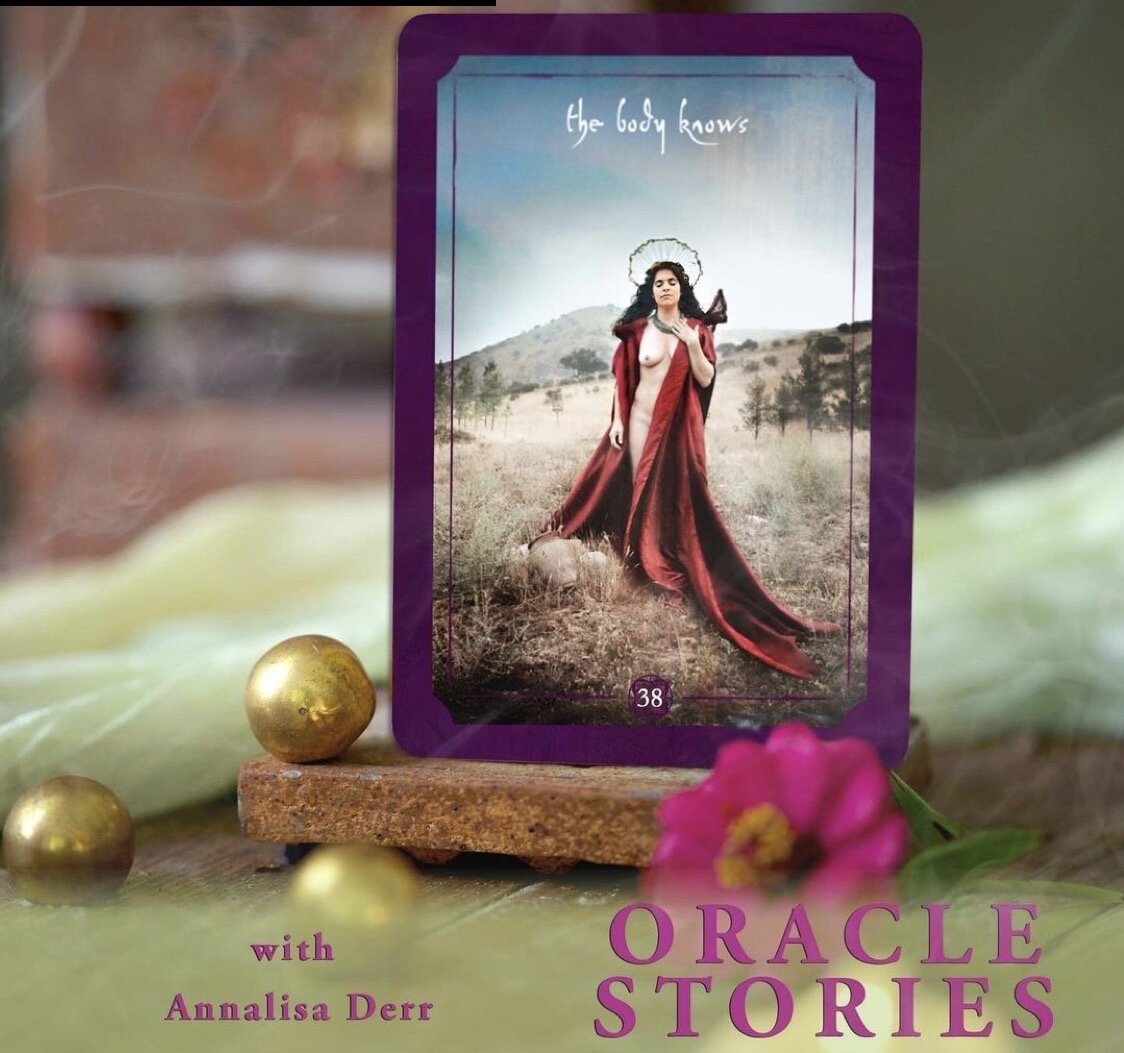

A conference by mythologists for myth enthusiasts. Run by two fantastic women, Stephanie Zajchowski, PhD and Joanna Gardner, PhD. Register today!
Feature: Women to Follow

Carol P. Christ, PhD
Feminist Theologian, Goddess Scholar, and Ariadne Tour Leader
(Image: From her website)
I first learned about Carol P. Christ from “Why Women Need the Goddess”, an essay she published in 1979 in a book (Womanspirit Rising) she co-edited with Judith Plaskow. I am currently revisiting this essay—again—for the umpteenth time because it lays the foundation for my doctoral thesis. Needless to say, each time I read her essay I come away from it invigorated, inspired, and feeling as though I am on the right path.
Christ also leads Ariadne Pilgrimage Tours in Crete and has published many books on the Goddess.
Check out her website: goddessariadne.org

Finding Mary Magdalene
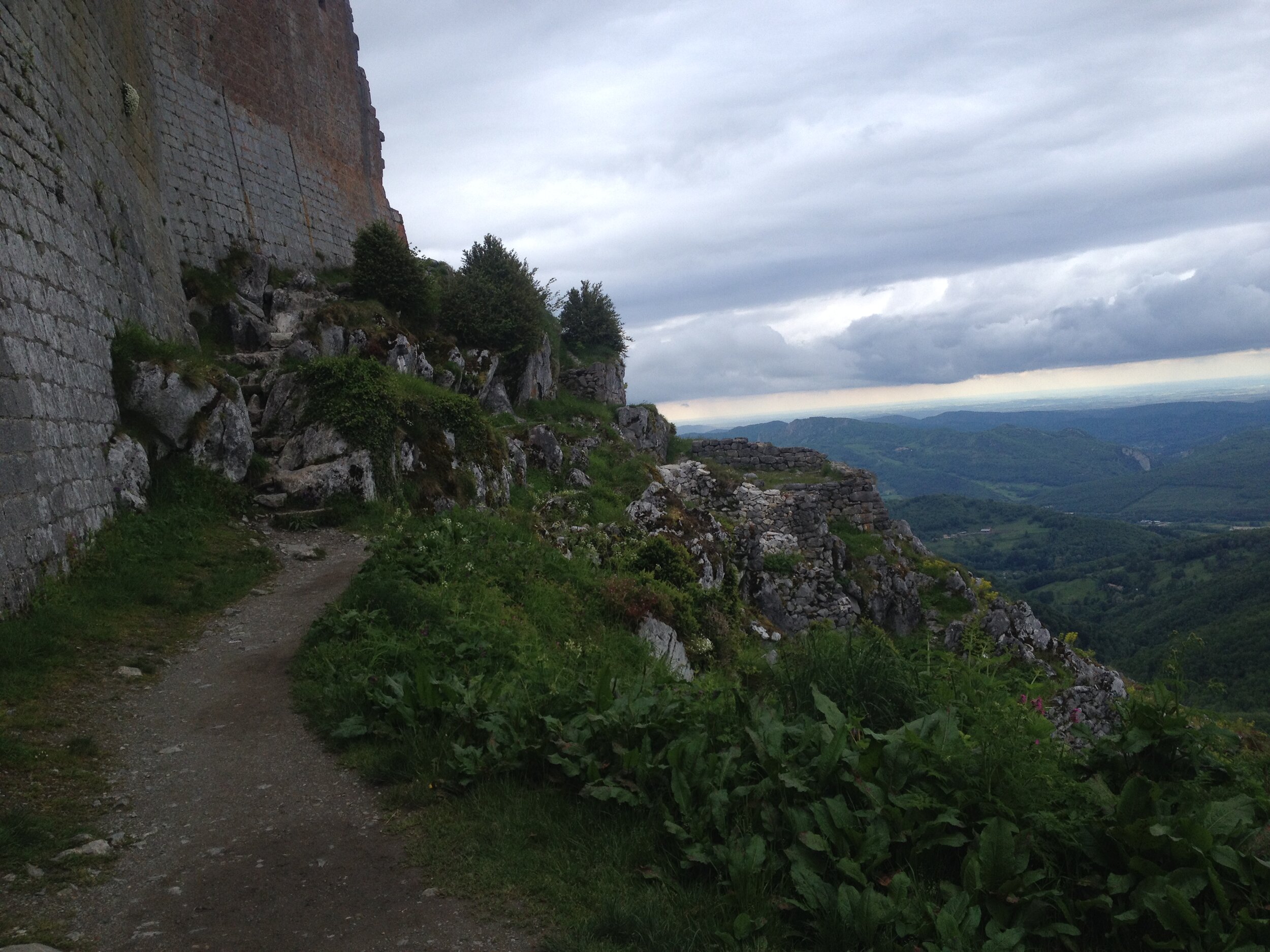
Seeing the fortress high above me, I parked my car and prepared myself for the ascent. The path was rocky and steep, but I felt encouraged by fellow pilgrims. Along the route I could hear the melodic ringing of cow bells, dangling from the necks of cows, far off in the distance. As I approached the summit I turned to look out among the sea of mountain peaks, and was rendered nearly speechless. “This must be what Heaven looks like,” I whispered. For as far as the eye could see, were voluptuous green mountain peaks, extending outward past Spain, and reaching what I imagined to be, the Atlantic Ocean . . .
FINDING MARY MAGDALENE BLOG SERIES.
“Languedoc Part 3: Finding Mary Magdalene”
Originally Published: June 19th, 2014
Coming off my “angelic high” from the previous day’s journey to Alet-les-Bains, I awoke and prepared for another driving adventure in France. You may remember that I had previously mentioned the terror I experienced at the mere thought of driving in France. When the time finally came, the only “challenge” I had was finding a gas station among the bountiful vineyards. My second driving experience, however, was not as charming.
I took a shuttle bus to the Carcassonne airport only to discover the car rental place was not actually located at the airport; and to make matters worse, it required me take a taxi to the rental office. Crisis averted, I got the car, set my GPS in English mode, and took off for the nearest gas station. There was, however, a minor problem. The station had no gas attendant on duty to take my cash, and because my American credit cards lack a “chip,” the French card machine would not take them.
So, off I went in search of a mega gas station. Again, I encountered the same problem. I kindly asked another driver what was going on and he informed me that because it was a national holiday in France, the gas attendant would not be on duty.
Well! That would surely pose a problem with just a quarter tank of gas and several sites to visit.
I drove back to the agency and explained my dilemma, of which he could offer me no solution, but ensured me there would be a station along the way in Limoux.
Off I went. By the seventh try, I was desperate. I sat at the pump wondering what to do. Then, as if by divine intervention, an attractive man with shoulder length curly hair, pulled up in a vehicle I would certainly label a “hippie van.” He must have sensed I have a thing for the gypsy type! I realized this was my chance. As he was pumping gas, I casually got out of my car, and approached him. Turning on the charm, I smiled and asked if he spoke English. “No,” he said, fainning apology. “Okay, no problem,” I mumbled to myself, “I’ll try in French.” So off I went about my “grand problème,” and he got it! Not only did he get it, but he offered to put the gas on his credit card in exchange for my cash!
Emergency averted, I took off for the destination du jour, Rennes-le-Chateau. To my amazement, and slight embarrasment, the very next gas station I passed had an attendant on duty. Obviously, there was an important lesson I needed to learn regarding flirting and French men.
International fame hit Rennes-le-Chateau with Dan Brown’s Da Vinci Code. However, decades before, the tiny town had become notorious for the scandalous parish priest, François Bérenger Saunière. Supposedly, he had discovered a hidden treasure on its grounds. Some say it was actual golden treasure, while others believed it was the remains of Mary Magdalene. Further more, Saunière was said to hold secret information about Jesus and Mary Magdalene.
After several winding turns, I arrived at the little mountaintop village of Rennes-le-Chateau. I walked through the quiet streets toward the abbey, stopping at a gift shop along the route. Decked with books and jewelry and music - pretty much all things spiritual - I had the sneaking feeling that something quite unspiritual was brewing.
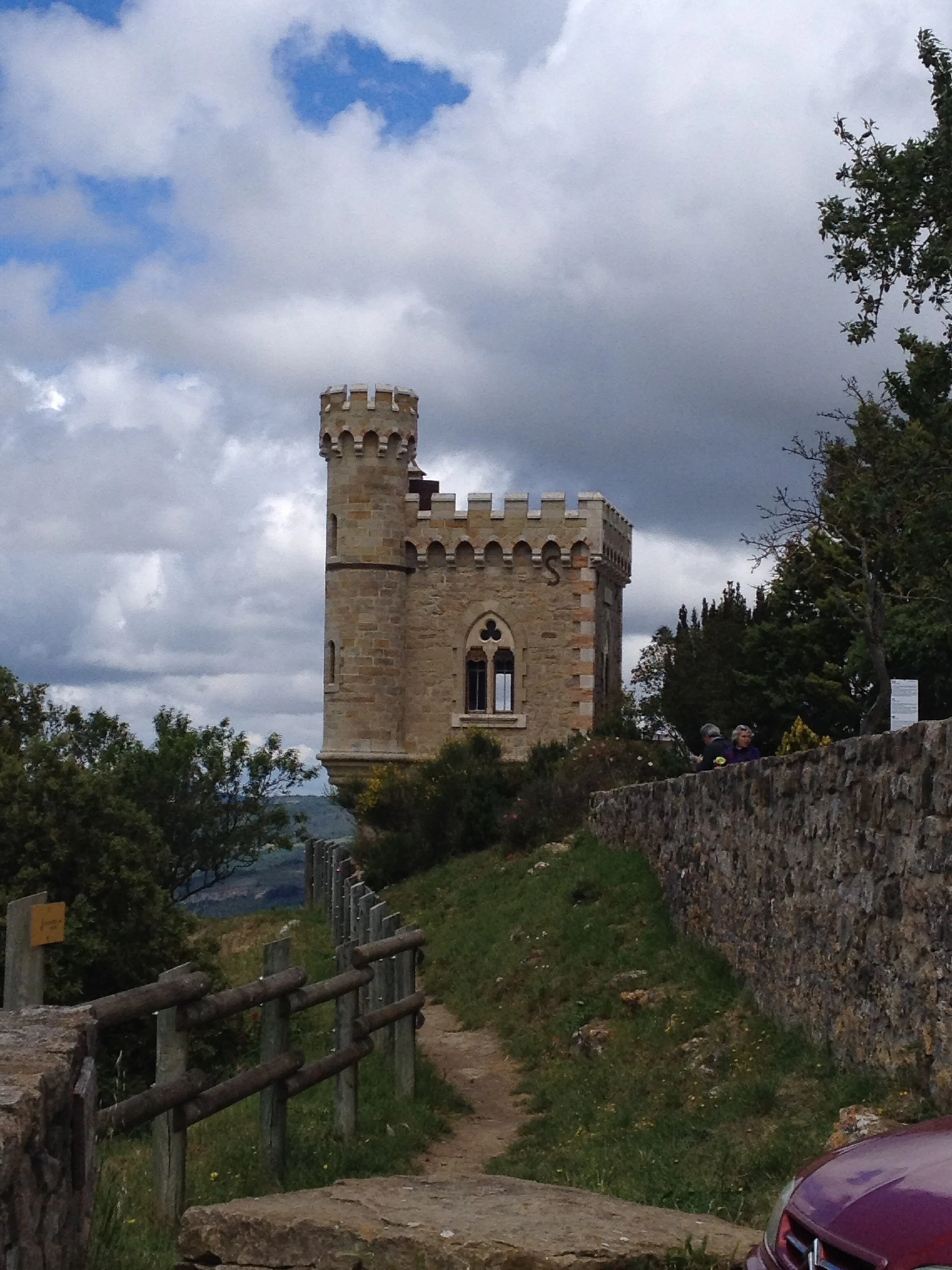
Somehow, I ended up buying a ticket for the museum, which was a conspiracy theorist’s dream. The museum gift shop even sold Rennes-le-Chateau wine, bearing Saunière’s face. Despite the lack of depth, I did find delight in the Magdal Tower, built on church grounds by Saunière.
According to Margaret Starbird, Magdal (from Magdala) means “The Tower” in Hebrew. She contends that the town of Magdala did not exist during the lifetime of Jesus and Mary, so it is more plausible that Magdala (Magdalene) was not Mary Magdalene’s given name. For Starbird, this suggests that Magdala was a name given to Mary Magdalene to denote her strength and wisdom within the community of Jesus and his followers, eventually earning her the title of “Apostle to the Apostles.”
The church of Rennes-le-Chateau was tiny and darkly lit. I knew in my heart that the spirit of Mary was not there; the energy had become more about the drama and intrigue of the Saunière story and less about her story. Mid-meditation, a camera crew entered the small church, filming a very important person, and his entourage. Images of Mary Magdalene were numerous, yet I found myself annoyed by the “scene” of Rennes-le-Chateau, and quickly left for solitude just outside the town walls. The surrounding grounds were beautiful and lush, and despite my overall misgivings, I feel there may lay a secret of Mary hidden within the hills of Rennes-le-Chateau.
I eagerly left Rennes-le-Chateau, but first, made time to enjoy a fabulous lavender creme brûlée.
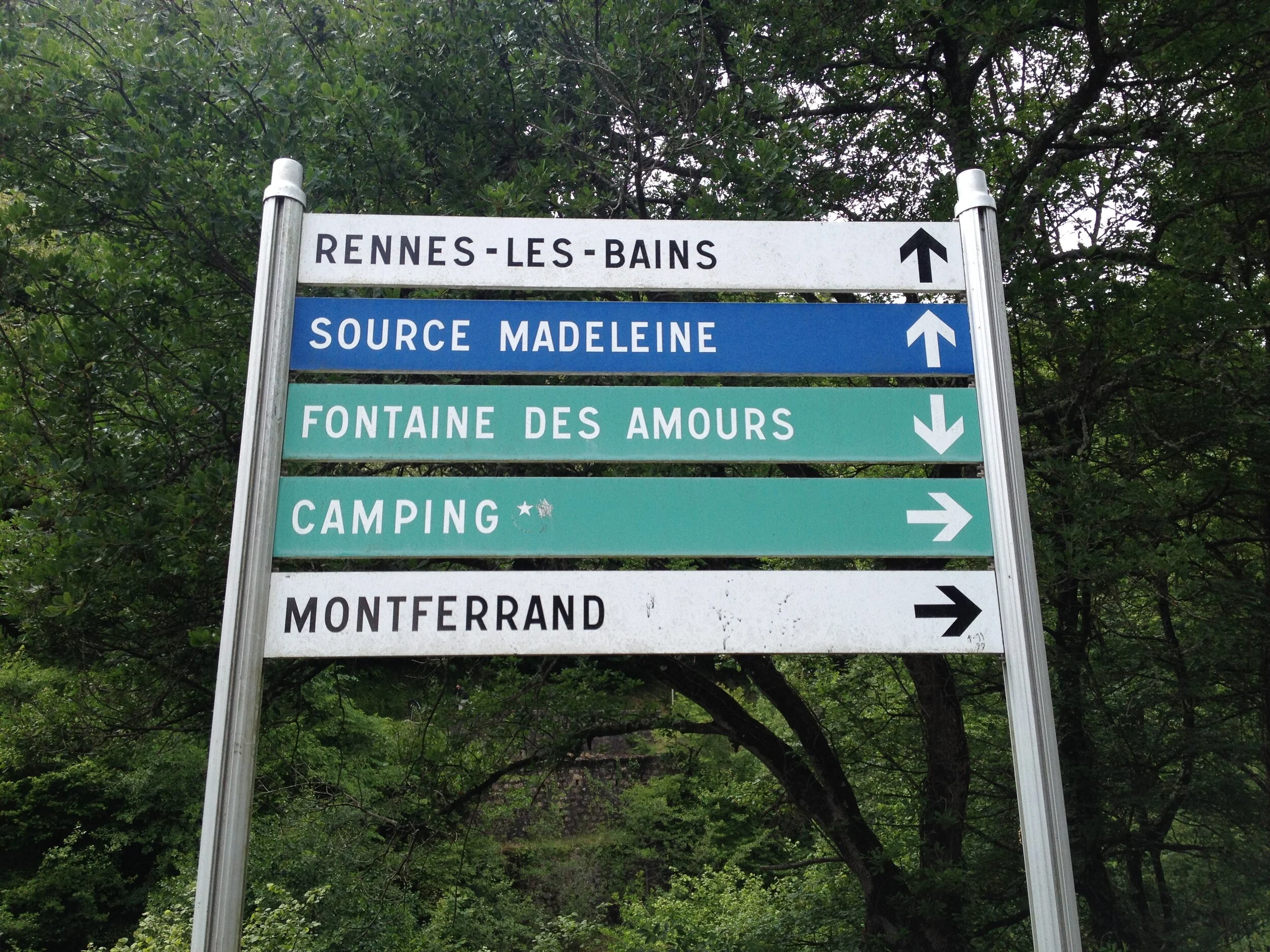
Next I drove to nearby spa town, Rennes-les-Bains. I was mesmerized by its beauty and vibrant energy. Hippies littered the streets. Inside I jumped for joy. Along the ancient pathways and the river of Rennes-les-Bains, one can find such glorious sites as the Seat of Isis, The Source Madeleine, and the Fountain of Lovers; where, legend has it, if you and your lover bathe naked in its waters, you’ll be lovers for all time.
Sadly, I was out of time. I left Rennes-les-Bains—promising to return soon—for Mt. Bugarach, a supposed former Essene community tucked away in the Pyrenees. I took a stroll through its empty ancient streets, admiring Mt. Bugarach, as it loomed over the city; a stoic protector of an ancient lineage forever in hiding from the ancient Roman Empire.
Severely behind schedule and over my allotted mileage, I decided to head to Montségur. To miss such a sight was not an option for me. Despite overwhelming car-sickness, I drove like the wind through the endlessly winding roads of the Pyrenees. After much anxiety and doubt that I would ever reach Montségur, my GPS informed me I was 5 kilometers from my destination. A heavy mist hung in the air, as I drove further into the heart of the Pyrenees and Cathar country.
I looked up and was overcome by the view of a fortress nestled high upon a mountain peak. “How stunning!” I exclaimed to myself. “How beautiful and majestic. But that CAN’T be Montségur. I only have 5 kilometers left…I’ll have to visit that site next time I’m in the region.” Ten minutes later, as I approached the town of Montségur, I realized that that fortress was indeed, Montségur.
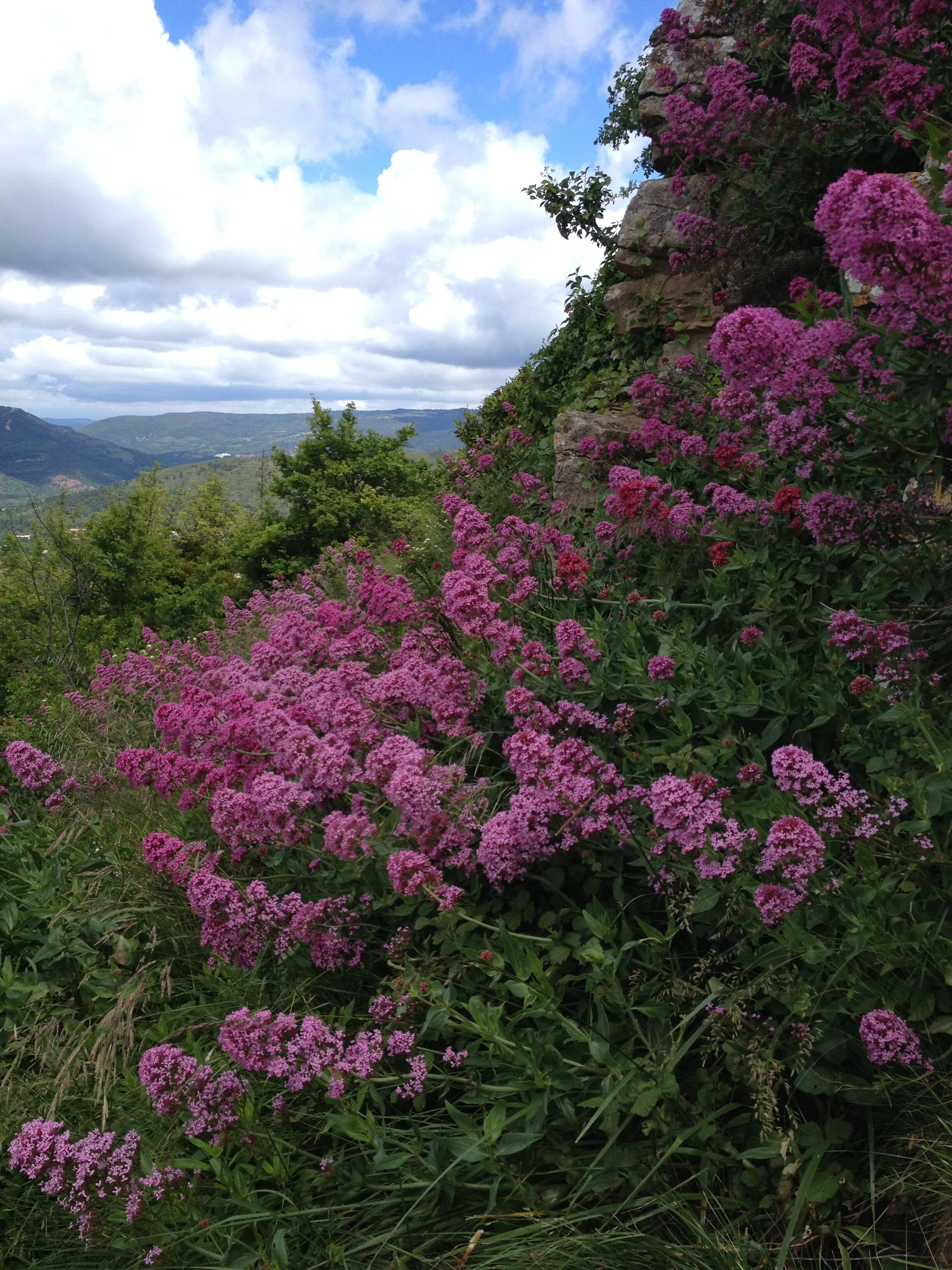
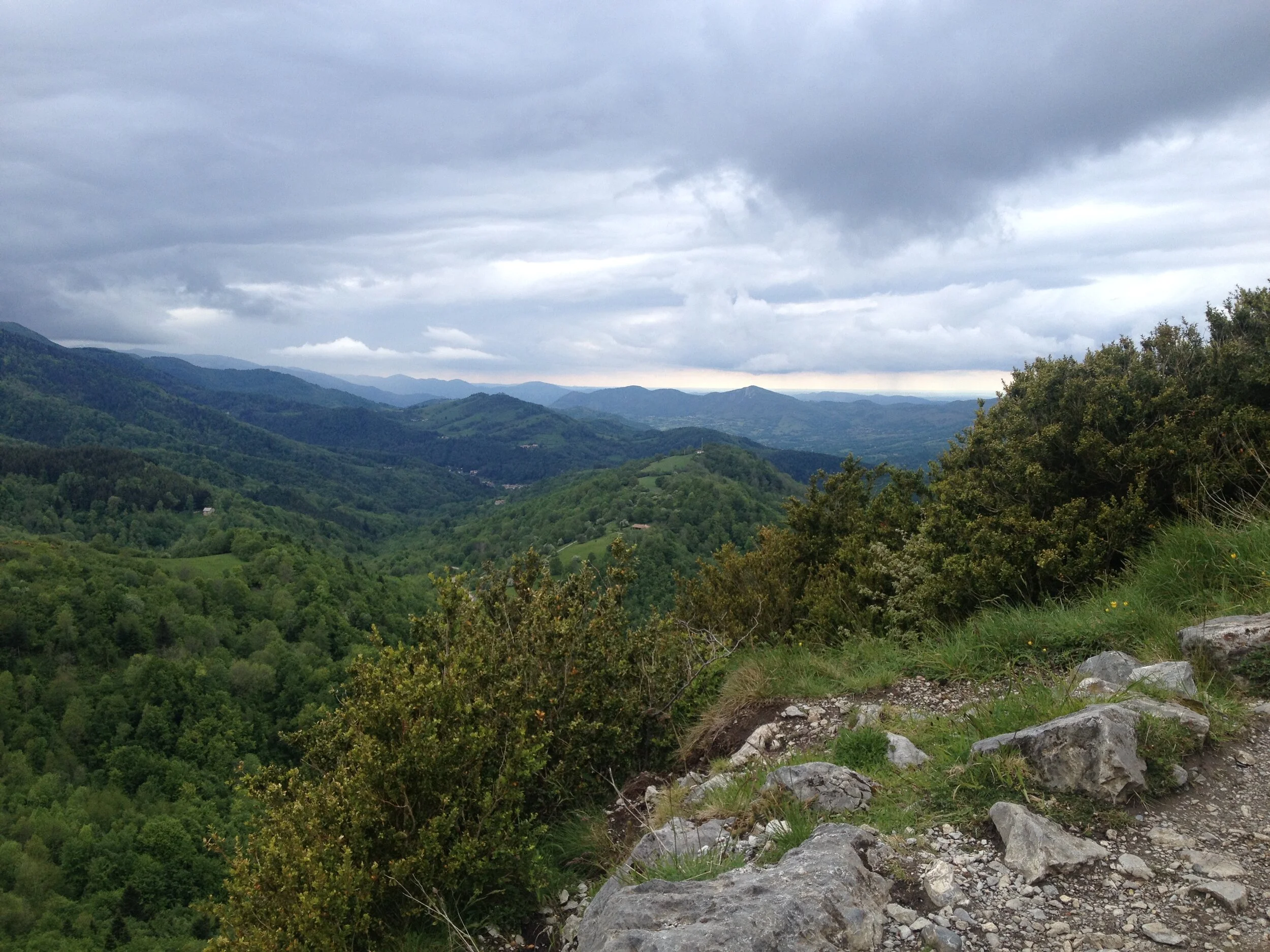
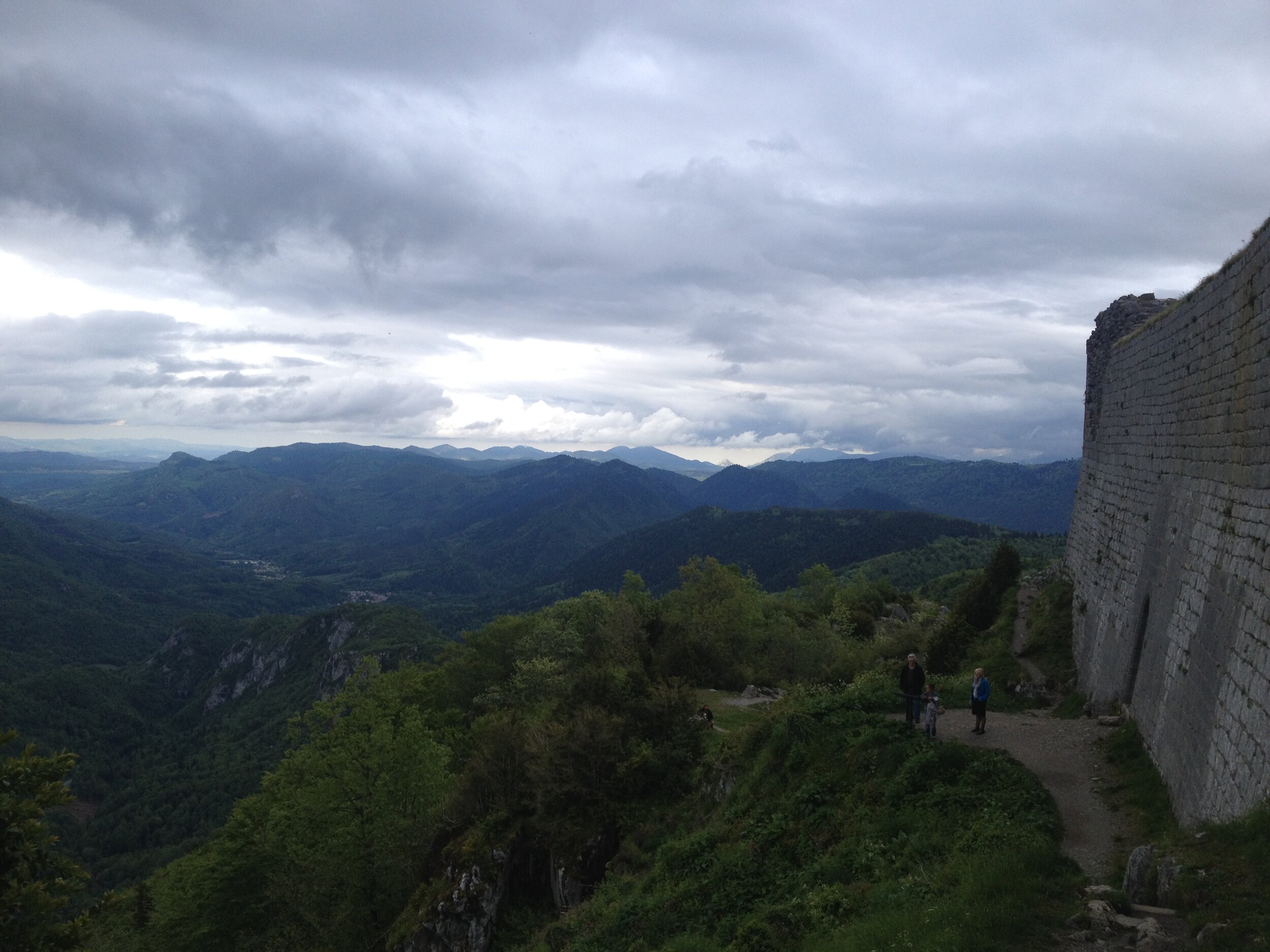
Seeing the fortress high above me, I parked my car and prepared myself for the ascent. The path was rocky and steep, but I felt encouraged by fellow pilgrims. Along the route I could hear the melodic ringing of bells, dangling from the necks of cows, far off in the distance. As I approached the summit I turned to look out among the sea of mountain peaks, and was rendered nearly speechless. “This must be what Heaven looks like,” I whispered. For as far as the eye could see, were voluptuous green mountain peaks, extending outward past Spain, and reaching what I imagined to be, the Atlantic Ocean.
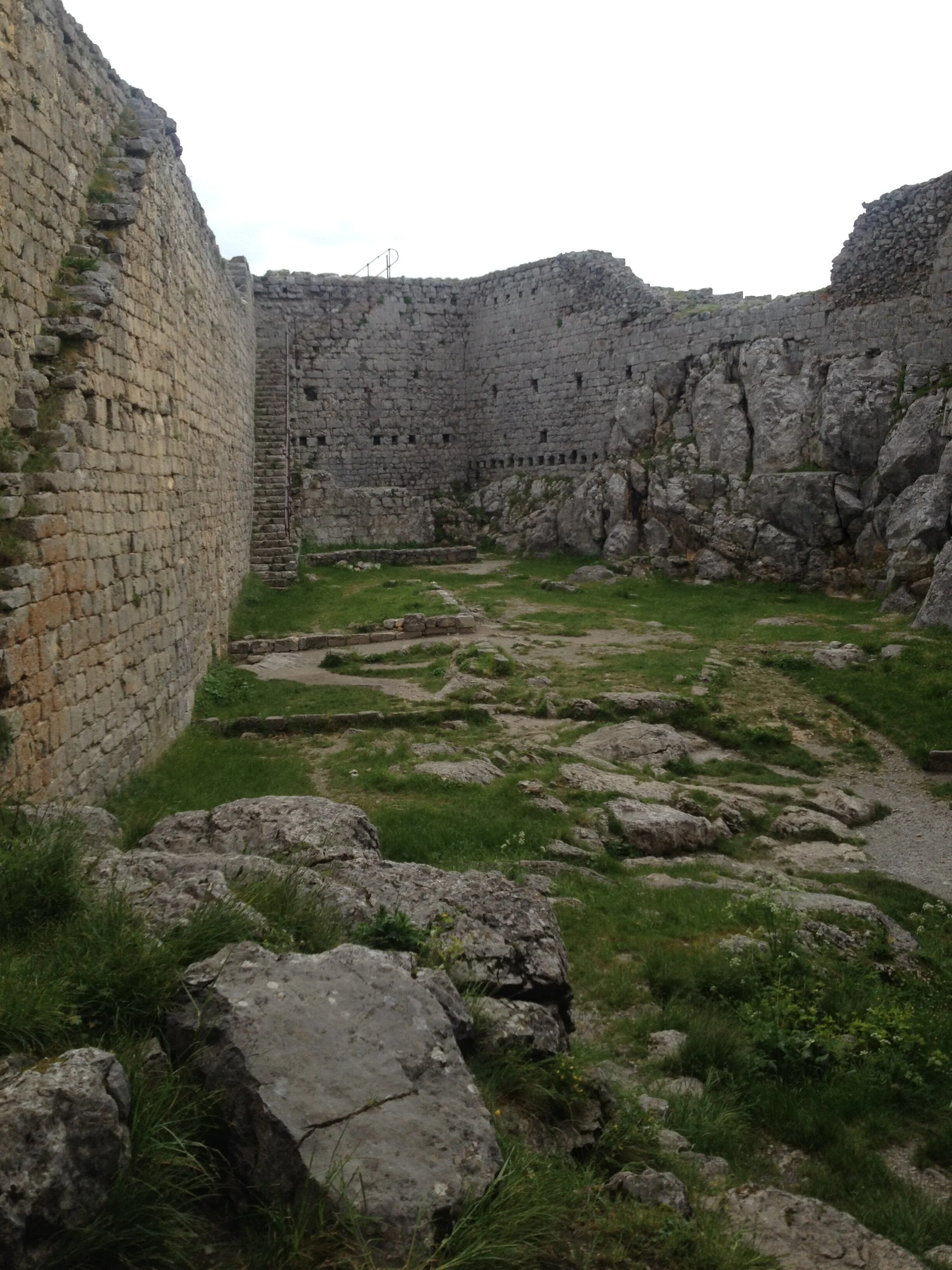
Face-to-face with the now abandoned majestic fortress of Montségur, I imagined life streaming in and out of it’s stone walls. I entered the fortress and a sudden stillness came over me, as if I were walking into someone’s intimate space. The inner walls of the fortress held the laughter of children. I could almost see them playing hide and seek. I realized there was a presence still lingering from the trauma of long ago.
Montségur gained notoriety for being the last stronghold of the Cathars in the face of the Crusades. History has mixed understanding of the Cathars, with the most commonly held belief that the Cathars were a serious acetic religion that believed the material world to be sinful, and therefore devoted all their attention and energy to the spiritual realm. In esoteric circles it is believed that the Cathars were actually the keepers of an original Gnostic Christianity. Their primary teacher, Mary Magdalene. And, depending on who you talk to, Jesus as well. The Cathar faith and belief held the knowledge of the Holy Grail, which was protected by the Knight Templar, and had connections to the activist medieval love poets, the Troubadours. To read Joseph Campbell’s exciting commentary on the Troubadours, click here:
https://journey-to-the-goddess.tumblr.com/post/86396881610/marriage-in-the-middle-agesas-in-most-of
The Church launched a full-out crusade against the Cathars and region of Languedoc. They slaughtered and burned them, until only those of Montségur were left. After a year siege, the water supply within the high fortress of Montségur failed, leaving the Cathars with no choice but to surrender. The Church, feeling “generous,” gave the Cathars the option to convert to Catholicism and be saved, or be burned at the stake. After a 15 days truce, it was over. All 200 Cathars - men, women, and children - calmly walked down the mountain and into the burning pyres. And that was, essentially, the end of the Cathars. Some believe a few escaped and kept the knowledge alive. Still others say those who escaped kept the royal bloodline of Mary and Jesus alive.
Upon my descent, I looked out at the endless horizon and wondered what it was like for the Cathars, in the face of certain death, to see this view for the last time. So I chose to honor the Cathars the only way I knew how: by infusing each step I took down the mountain with honor and dignity, for a people willing to die for their beliefs.
My drive home was full of emotion. The mystique of the Pyrenees faded into perfectly manicured rolling vineyards, and country houses made of stone.
I returned my car without problem and made my way back to Carcassonne. Suddenly, I realized my pilgrimage was officially over. I smiled as I reflected on the months of planning and hard work it took to prepare for this pilgrimage, that resulted in a life changing two week adventure. The icing on the cake? On the following day I would be turning 31 in my new favorite French city, Arles.
~~~~~~~~~~~~~~~~~~~~~~~~~~~~~~~~~~~~~~~~~~~~~~~~~~~~~~~
My heart bursting with love, I traveled from Arles to Nice and from Nice down into Italy. An open invitation awaited me in Ischia. Tears fell from my face as I crossed over the French border into Italy. For this self-proclaimed Italophile, something new was blooming inside, something unexpected: a yearning to return to the southern region of France, where Mary Magdalene is honored and revered as a woman of courage, devotion, and passionate love. Her name and reputation have been dirtied for nearly 2,000 years, as a way to manipulate and control people. One result, women have been placed secondary to men. This, as history is our witness, is a great disservice to women and men alike.
Although back in the states, my quest for Mary Magdalene has only just begun. Many others have come before me, and surely there will be plenty to follow. To France and back, my search for Mary Magdalene has led me back to me. My journey is her journey, and from this place of wisdom, I am truly finding myself.
Saint Sara’s Final Procession to the Sea
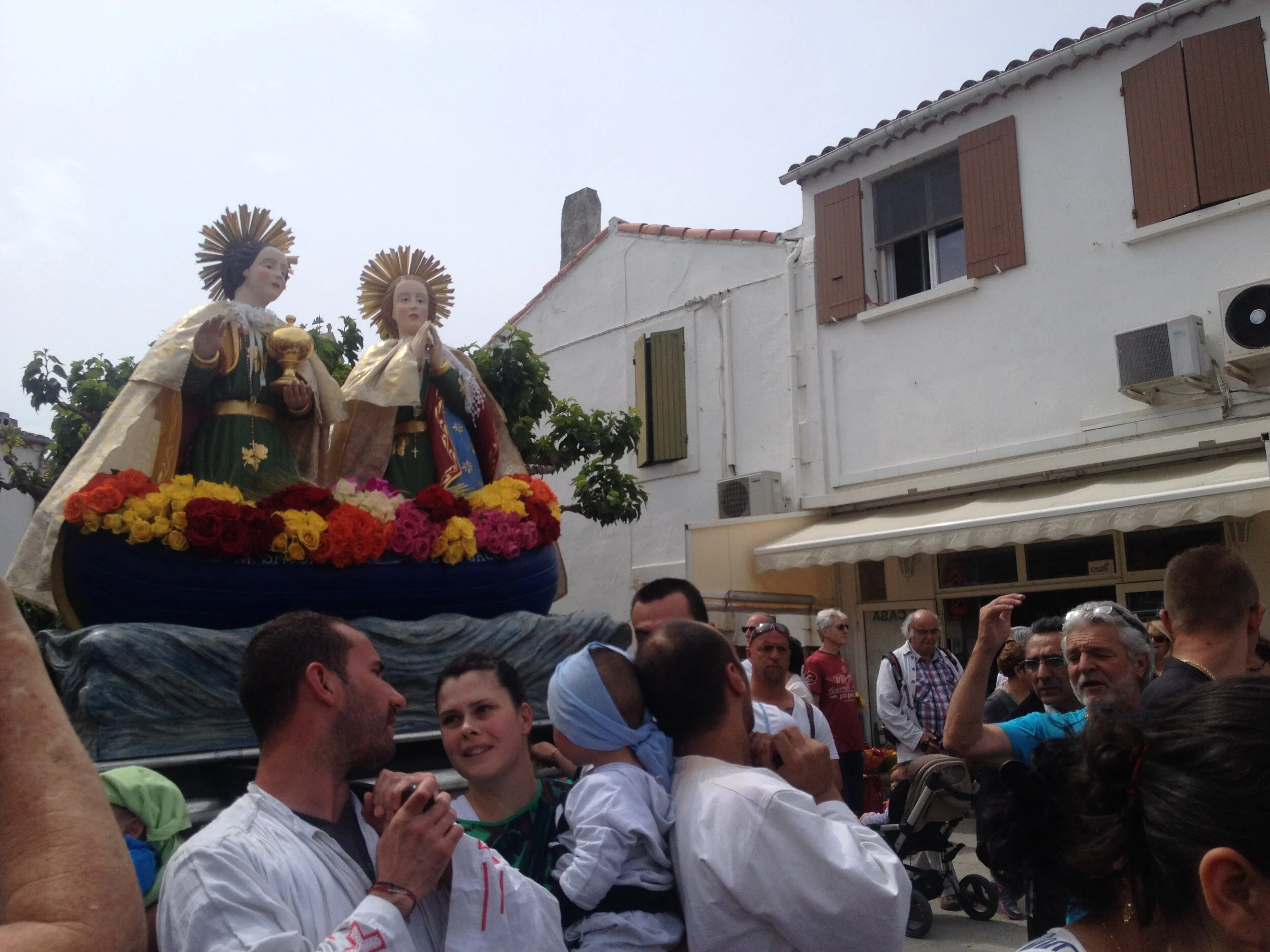
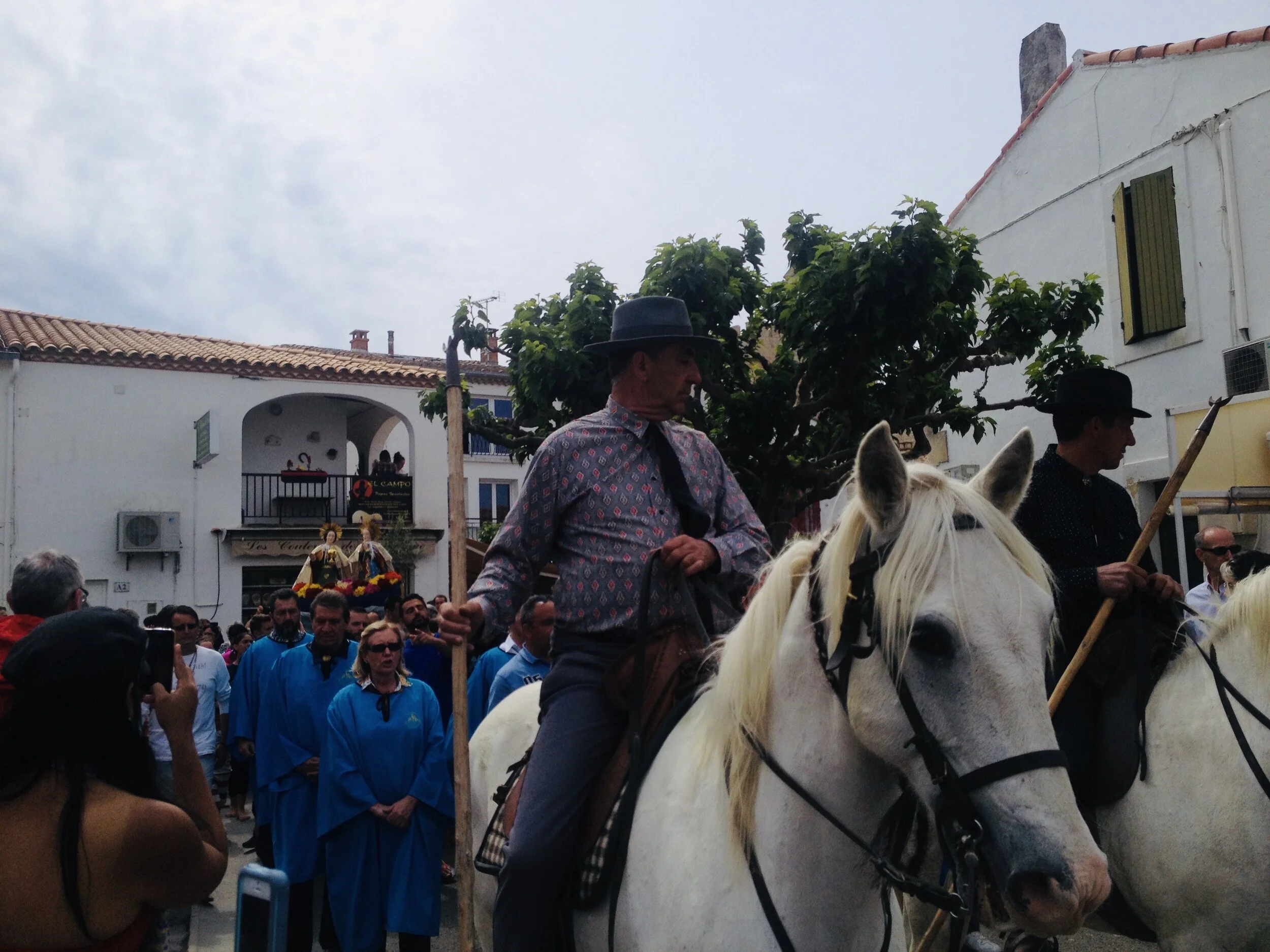
This time, we came face-to-face with the same head priest who had lead the procession the day before. As before, he was blessing the pilgrims along his processional route. He was followed by men riding atop beautiful white horses. The men on horses parted the crowds, allowing the statue of the Two Marys to pass through, toward the sea. I thought this curious that the third Mary, Our Lady Mary Magdalene, was not represented as well . . .





FINDING MARY MAGDALENE BLOG SERIES.
“Saintes-Maries-de-la-Mer, Part 3: Saint Sara’s Final Procession to the Sea”
Originally Published: June 9, 2014
Sunday I awoke feeling as if the day before had all been a dream. Celice and I had a LUXURIOUS breakfast complete with freshly baked croissant, creamy yogurt, fresh juice, and house-made cappuccino topped with whipped cream. The proprietor of our family-run hotel was more than willing to make our stay memorable. He even offered to drive us into town, saying for him, it is only a “promenade.”
Having experienced the grand procession the previous day, I walked into town feeling light, and free of expectation. As it turned out, Saint Sara granted us the privilege to re-witness the procession, from beginning to end.
This time, we came face-to-face with the same head priest who had led the procession the previous day. As before, he was blessing the pilgrims along his processional route. Once again, he was followed by men riding atop those same beautiful white horses. The men on horseback parted the crowds, allowing the statue of the Two Marys to pass through, toward the sea. I thought this curious that the third Mary, Our Lady Mary Magdalene, was not represented as well.
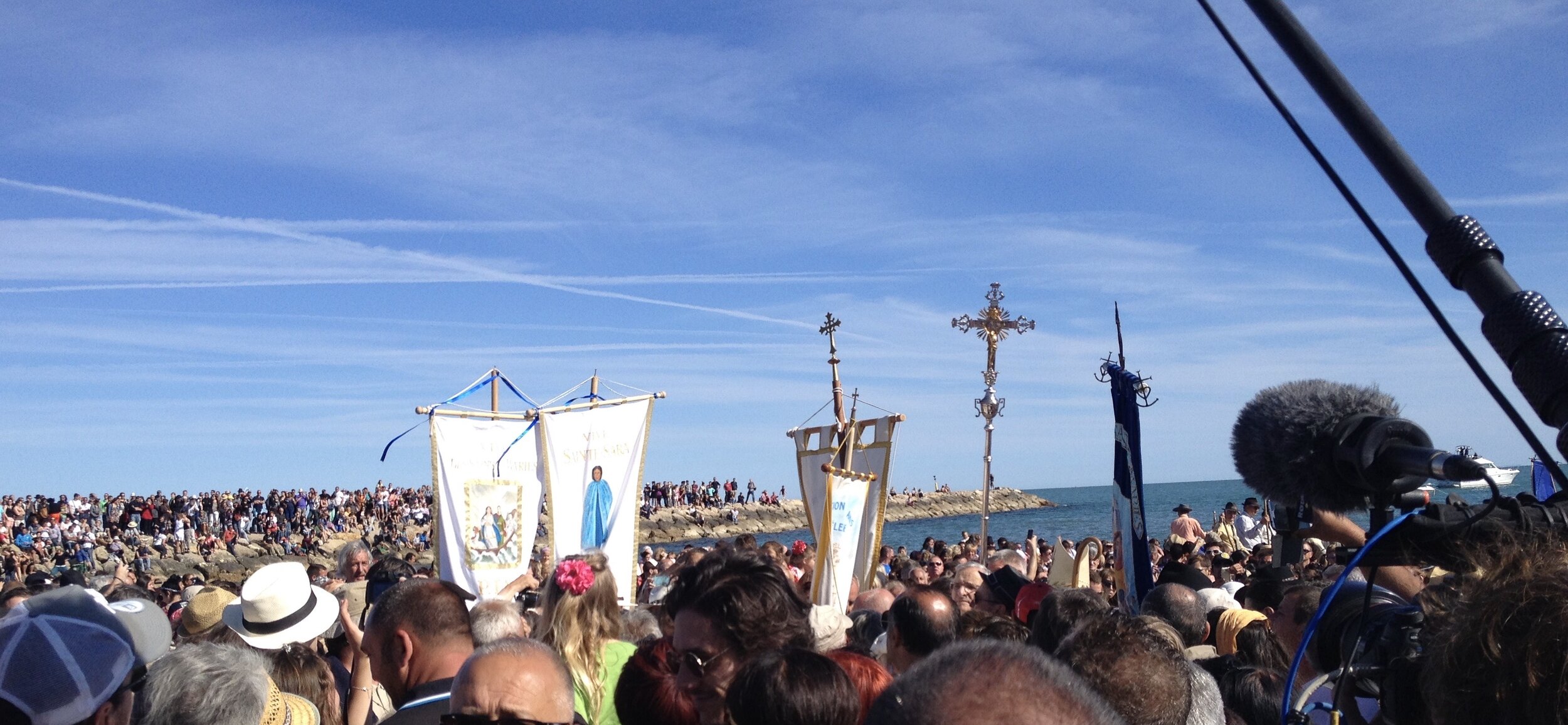
Quickly, Celice and I ran ahead, cutting through town, in an attempt to beat the head of the procession to the sea. In a matter of moments, we made it to the shore to witness the sea-bound processional ceremony unfold before our eyes.
Along their route, the priests chanted over blow horns, “Long Live Les Saintes Maries!” and “Long Live Saint Sara!” The crowd soulfully repeated the chant.
Suddenly, a waive of an other-worldly spirit took over the crowd. Time and space seemed to expand, taking me and my fellow pilgrims back to the moment the Three Marys landed upon the shores of French Gaul, greeted by our lady of honor, Saint Sara.
Entranced, I watched as the pilgrims steadily processed the Two Marys, followed by Saint Sara, into the sea. Moments later, the procession turned face, and began its march back toward the town. I turned to see that Celice and I, just as the day before, were surrounded on all sides by the riders and white horses. To me, this double experience was a clear sign that the spirit of Saint Sara was taking special care of us.
The next moments passed like a blur: Saint Sara approached me, flanked on all sides by pilgrims willing to carry her load. My body filled with the chanting of her name and my heart ached to embrace her. Suddenly, I rushed toward her and reached out my hand. One of the young women carrying Saint Sara grabbed my outstretched hand and placed it upon Saint Sara’s dress. Tears flooded my eyes as I gently backed away, feeling into the immensity of the moment.
Time stood still as I watched the procession disappear into the streets of Saintes-Maries-de-la-Mer. In a moment of clarity, I took a tiny glass bottle, and dug it into the sand, collecting a bit of the earth that once welcomed “The Three Marys of the Sea.”
Trying to catch my breath, I turned to Celice with tears in my eyes. She pulled my hand, and off we went in the direction of the basilica.
Once there, I took myself down to the crypt. I wanted to see Saint Sara one last time. I quickly made my way to the front of the line and looked Her in the eye. She spoke words of love to my heart for having completed another piece of my soul’s journey.
Before leaving the church, I noticed numerous rose garlands descending from the ceiling. They seemed to point to a large wooden box, placed high upon the altar, delicately painted with the story of the Marys. Following the motions of others around me, I gently placed my hand upon the box, thanking the women one final time for their great love and courage.
Later, I learned the box is said to contain the remains of Mary Jacobe and Mary Salome. This led me to deduce that the reason Mary Magdalene was not “physically” included in the procession is because her journey did not end at Saintes-Maries-de-la-Mer. Rather, it is believed she was guided by angels to the cave of La Sainte-Baume, where she continued to pray and work in the name of Love.
Celice and I made our way to the Arles train station, the place in which we had met three days earlier. We hugged goodbye, knowing in our hearts that our time together had been a reconnection, rather than an introduction. She left for her final pilgrim site, Rennes-le-Chateau, while I remained in Arles, the city that would quickly steal my heart.
READ NEXT BLOG: The Fortified Medieval Castle of Carcassone
The Pilgrimage Begins
The Legend of Mary Magdalene post crucifixion is sort of a “choose your own adventure” story. However, what is commonly held as truth, in the South of France at least, is that Mary Magdalene, along with Mary Salome and Mary Jacobe were set assail in a boat belonging to Joseph of Armithea. They were in exile, fleeing the Roman Empire, and . . .
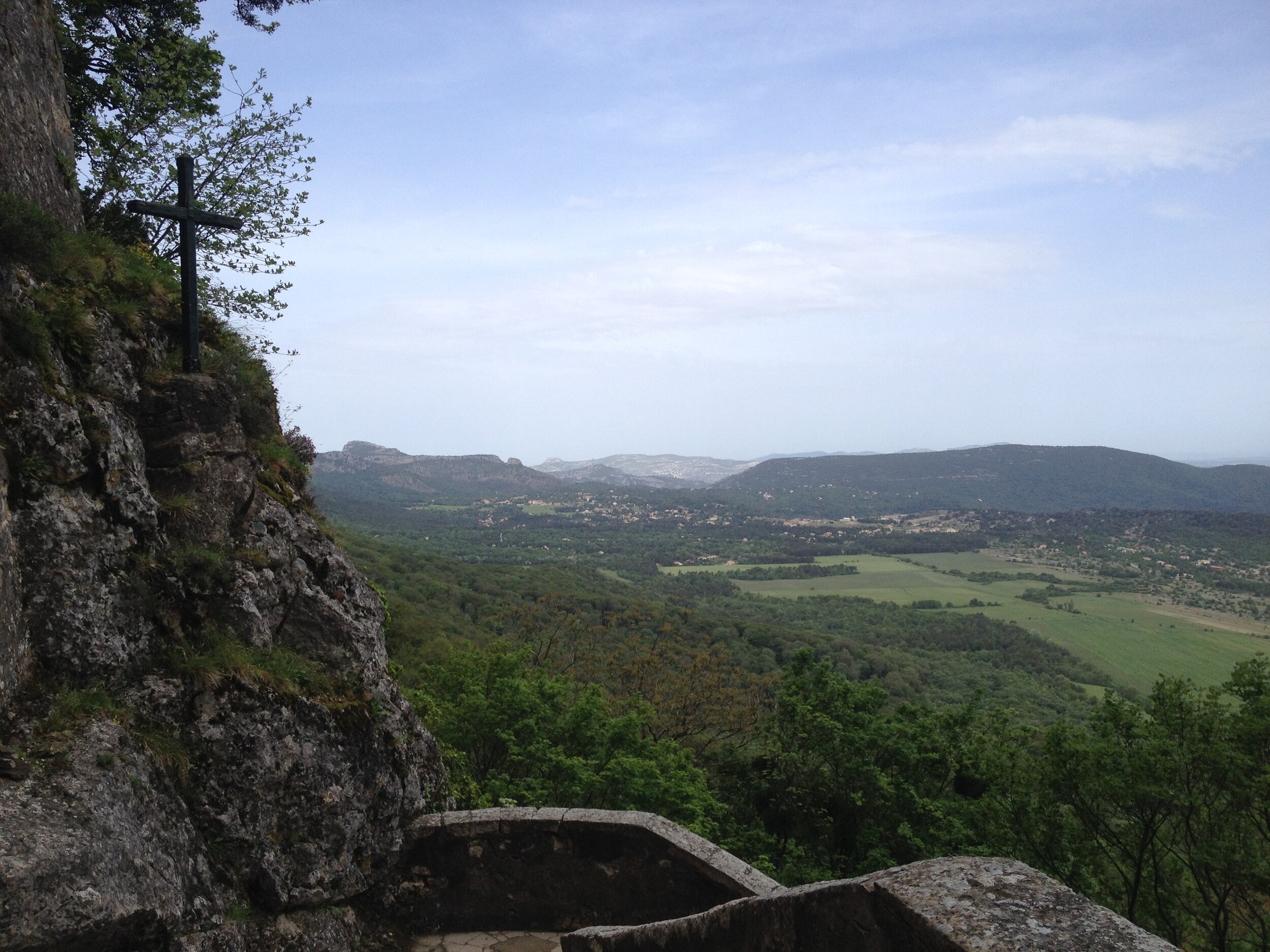
Finding Mary Magdalene Blog Series.
“The Grotto of La Sainte-Baume, Part 1: The Pilgrimage Begins”
Originally Published: May 27, 2014
The Legend of Mary Magdalene post crucifixion is sort of a “choose your own adventure” story. However, what is commonly held as truth, in the South of France at least, is that Mary Magdalene, along with Mary Salome and Mary Jacobe were set assail in a boat belonging to Joseph of Arimathea. They were in exile, fleeing the Roman Empire, and determined to spread the message of The Way, as expressed by Jesus. Their ship landed upon the shores of what was once known as Gaul, but today is known as the Camargue region of France, in a little sea-town called Saintes-Maries-de-la-Mer.
Although there are many variations on the Mary Magdalene legend throughout the region, the dominant version is that, after preaching the gospel to the inhabitants of Provence, Magdalene eventually made her way to the cave, La Sainte-Baume. There she spent thirty years in prayer and meditation, taken to the heavens by angels every hour of the day for material and spiritual sustenance. And this is where my story begins:
La Sainte-Baume is a pilgrim site at the base of Le Plan d’Aups. One must rent a car to get there, which, admittedly scared the crap out of me. For months I had been worrying about driving in France. Well, long story short, I finally made it to the Aix-en-Provence train station to pick up my car: a compact citroen diesal engine - tiny, lightweight, and non-descript. After several deep breaths, as if preparing myself for child-birth, I began my engine and took off for La Sainte-Baume.
Wanting to ease into my European driving experience, I chose to avoid the highways and instead took the back route from Aix to Saint-Maximin and then onto La Sainte-Baume. After about ten minutes, the English-accented GPS guide and I had a running joke about his constant command to “Cross the round-about.”
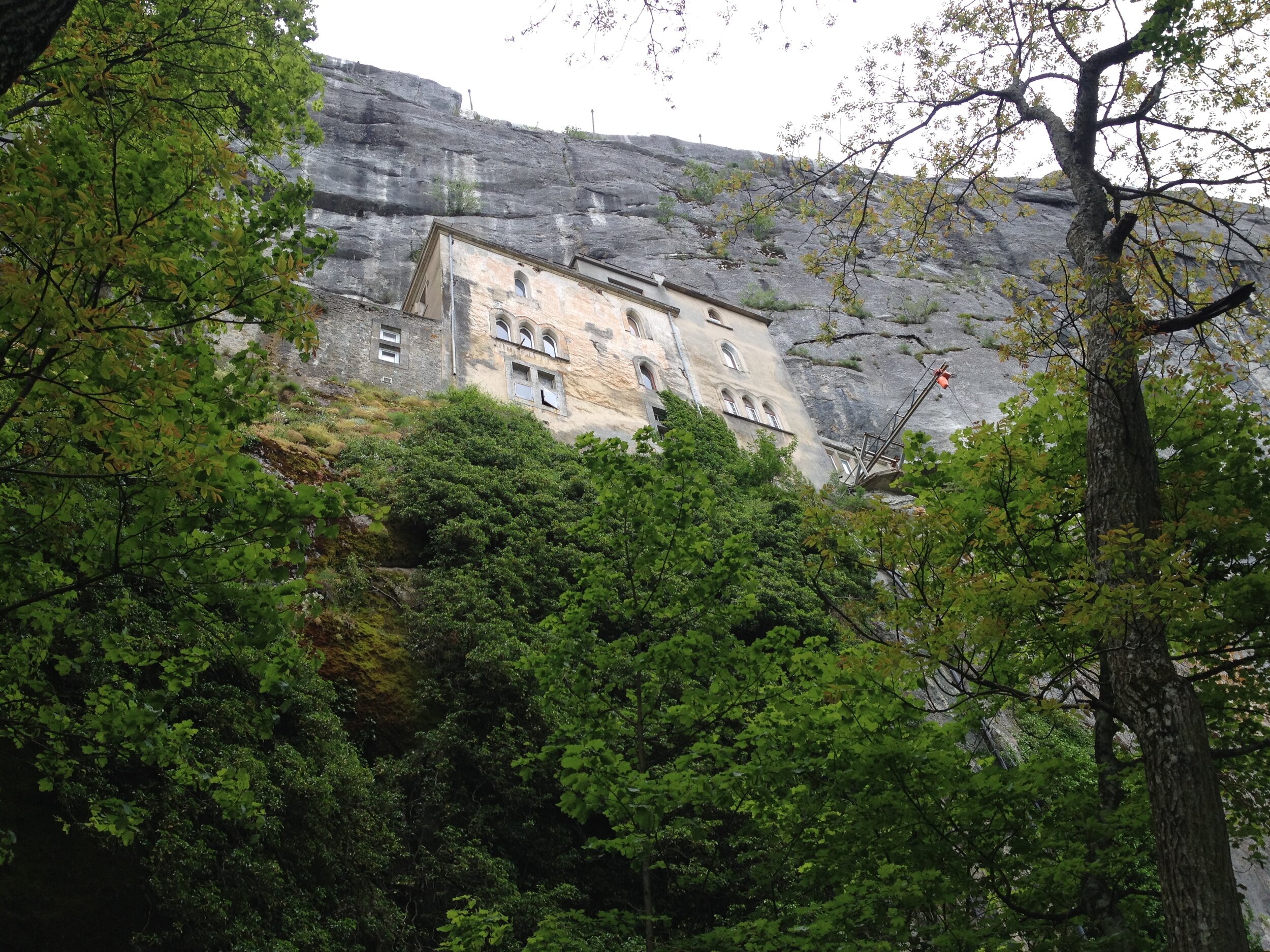
The drive to Le Plan d’Aups was stunning. I drove through vineyards and unpaved countryside roads. After climbing from Nans-les-Pins to the base of Le Plan d’Aups, on what was practically a single-lane road, I came upon it: La Hostellerie de La Sainte Baume. The Hostellerie is a functioning monastery run by the Dominican order. They hold daily mass in the Hostellerie as well as in the cave of Sainte-Baume.
After depositing my baggage, I took a walk outside. The cave-turned-monastery lay just above the tree tops, awaiting my arrival the following day. I walked through the ancient untamed grass strewn with poppies and crickets. I felt the wind upon my face–which I was later told was coming eastward from Greece…ahhh, only a French man could make such a statement sound so romantic! I imagined Mary Magdalene walking upon this land 2,000 years ago. I slept well, knowing I was in the care of Mary.
The following day at the communal breakfast–which included a morning prayer and Sunday School songs–I met 17-year-old Marie, her mother Jean and grandmother Marie-Therese. This encounter put my French language skills to the test, as these ladies spoke almost no English. So, I braced myself, and allowed our mutual passion for Mary Magdalene guide the way.
Jean asked me why I had come all this way, by myself, to La Sainte-Baume. I told her, “For Mary Magdalene. Why? Because I love her.” Jean looked me with piercing intensity, and said, “It is because she had so much love for Jesus.” Taken aback by the simple, yet deeply resonate statement, I could do nothing but nod in sincere agreement. It was then I understood the real impact Mary Magdalene has had on her beloved followers for millennia.
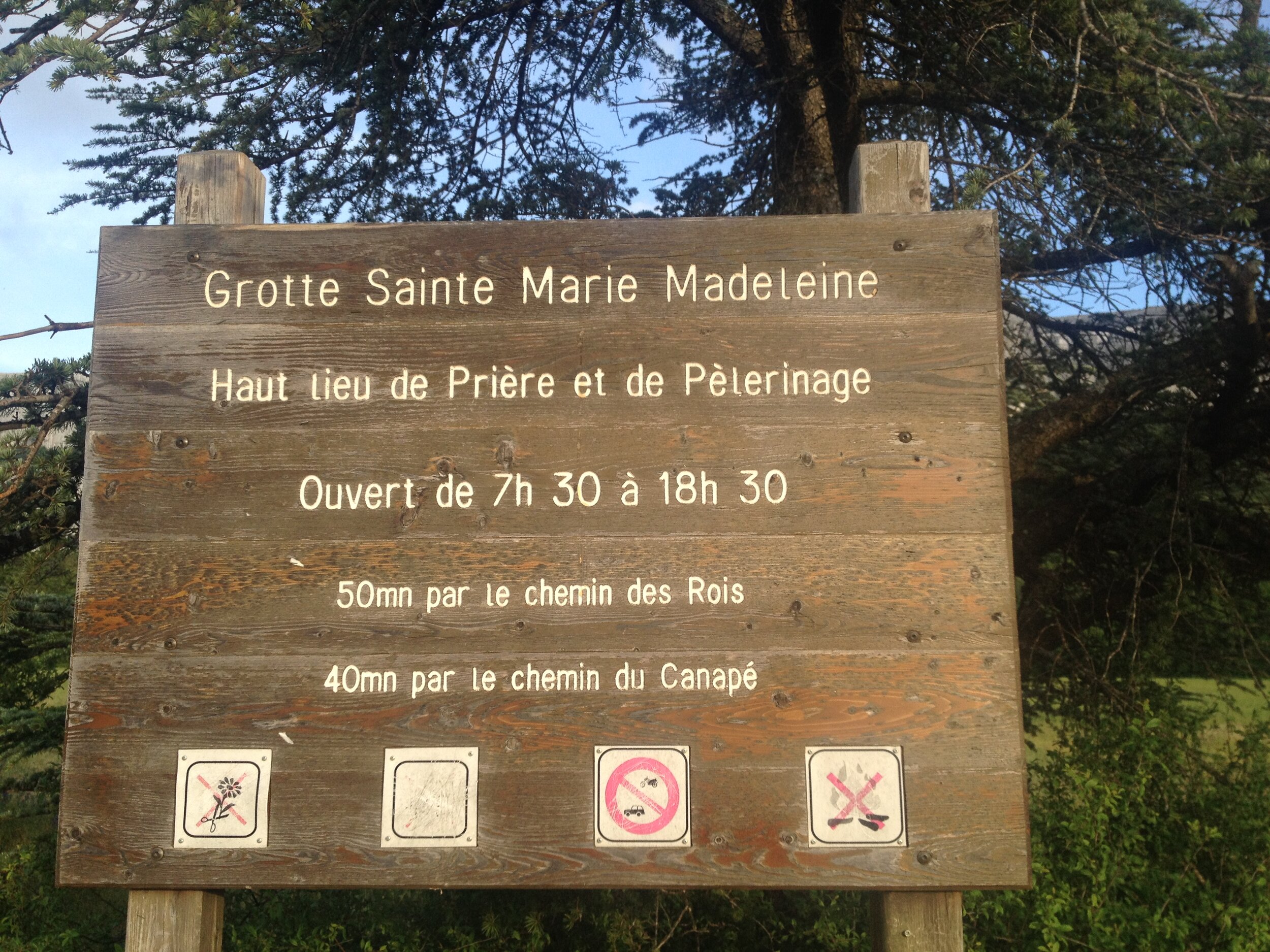
I looked around the room and suddenly realized that it was full of people with a deep love and reverence for one of the most important women in Jesus’s life. Many of us had different interpretations of this love, but it was the pureness of Mary’s love–not a religious pureness, but the pure potential of unconditional love–that brought us together. And it wasn’t just me. Hundreds of people come to La Sainte-Baume every day to hike to the cave and honor her.
Marie and I climbed to the top, so deep in our conversation, alla Franglais, that I didn’t notice the challenge of the steep climb. As we reached the base of the monastery, a stillness came over us.
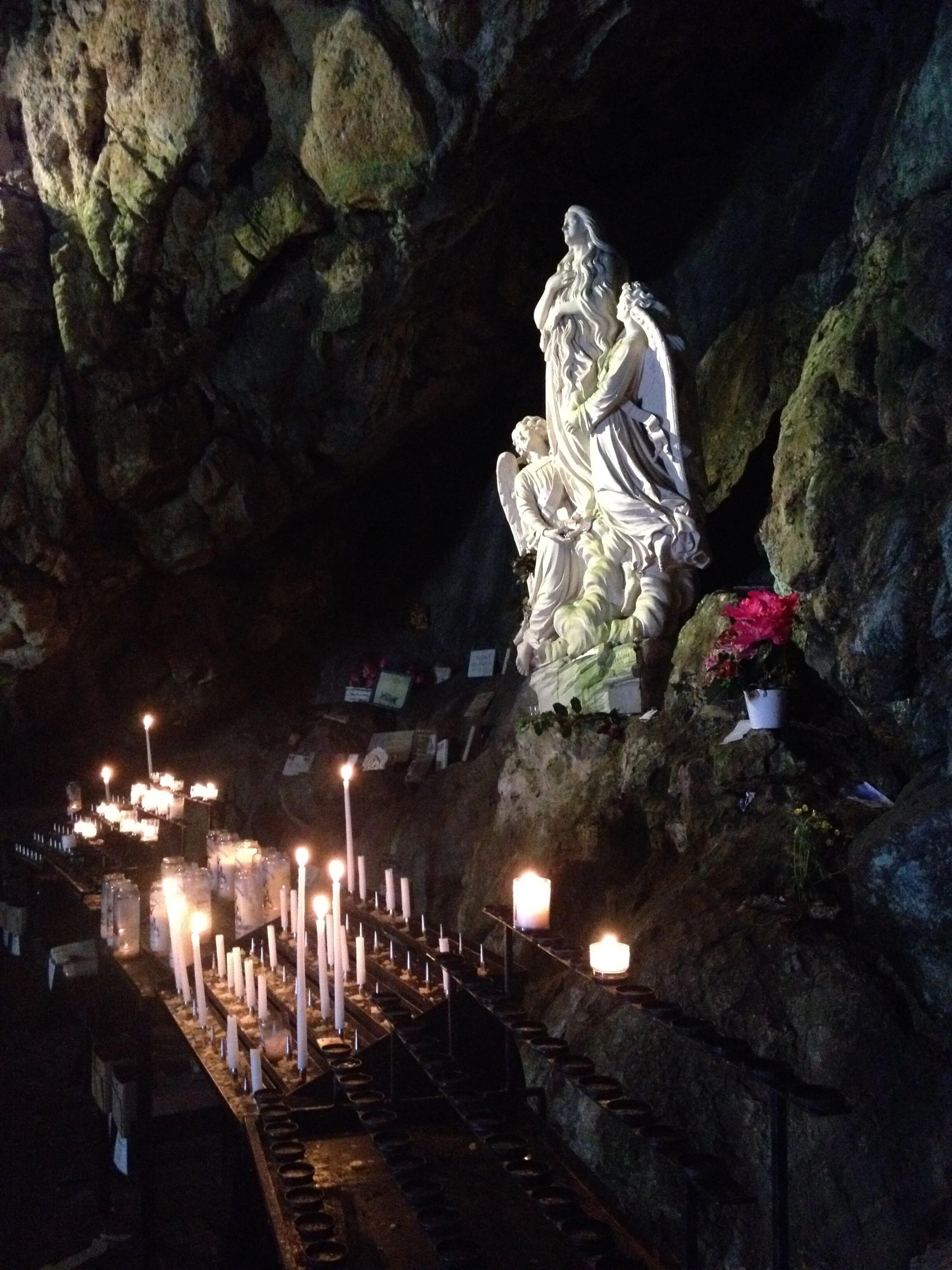
The potency of the Sacred Feminine was in the statues of women surrounding and grieving at the foot of the cross. A life-sized scuplture of Mother Mary holding the lifeless Jesus with Mary Magdalene weeping at his feet sits across from the entrance to the cave.
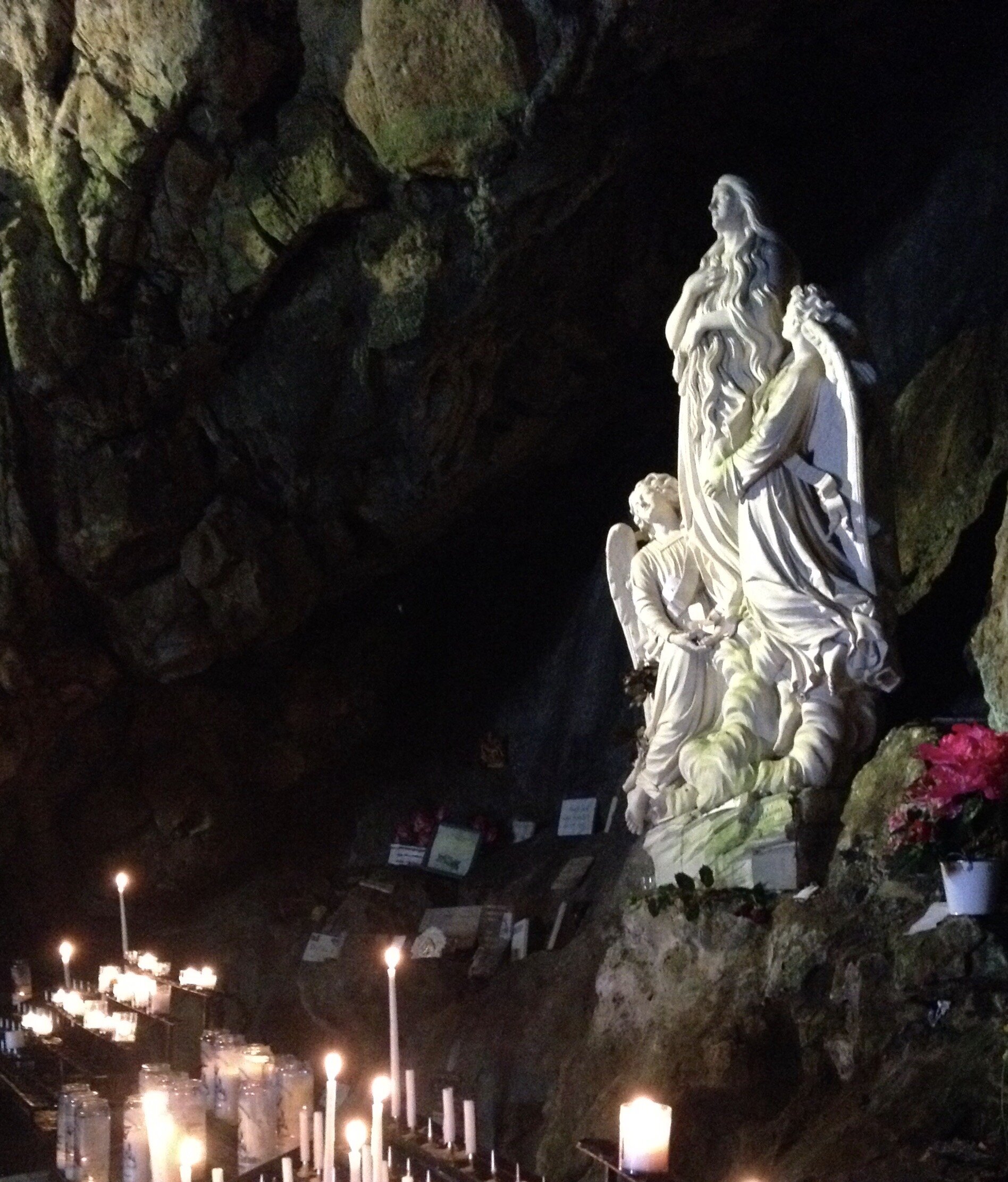
As Marie and I entered the cave, a cool dampness embraced us. I could hear the dripping of water. The haunting glow of the candles allowed the presence of Mary to become very real.
I felt drawn to the furthest most corner of the cave down at the base of the staircase. Walking in silence, I turned the corner, and saw the statue of Mary Magdalene, cross in hand, in agony over her loss. After investigating the rest of the cave, I soon returned to this corner, feeling Mary’s presence strongest there. There I remained, in prayer and gratitude, for such a woman; a woman who has been misinterpreted and debased for too long.
The four of us stayed on for 11 AM Mass. The chanting of the priests rang like bells in the cavernous space….At the end of the day, France is a Catholic country, and the Dominicans are a Catholic order. And for many of them, Mary is important because of the profound love and devotion she had for Christ. Officially, she showed this love and devotion through her act of penance, as well as for her role as the “Disciple of the Disciples,” who spread the message of Jesus throughout the region. SHE brought the message of The Light and The Way–which was synonymous with her profound love and devotion–to France.
Marie eventually asked me my beliefs concerning Christ and Mary, to which I gently explained that, for me, Jesus and Mary represent the masculine and feminine faces of God. She told me she believes that Jesus is the one and true God and that Mary was his devoted disciple. I smiled and told her that I respect all points of view and at the end of the day, it is Mary’s profound love, devotion, and strength that connects us all.
After parting ways with my companions, I had lunch, but did not feel at ease. I heard the call in my heart and knew I needed to return to Mary, in that cave, and in that moment. I practically ran up the mountain. Reaching the top, out of breath, I entered the cave and was embraced by her love. I went directly for my hidden corner and prayed and asked for guidance. As I sat in meditation, she responded, “Just listen.” I laughed to myself at this simple and often repeated advice. Then and there, I stopped asking questions and surrendered to the way she would have me go and be.
Some time later, I discovered I had missed a statue of Mary behind the Priest’s altar. Here Mary appeared to recline in a somewhat erotic manner. Many notes and flowers were left, along with engravings–the oldest of which from 1863–bearing her gratitude.
And then, suddenly, I heard it. I listened, and she spoke. She asked me to give her a ceremony the following day upon my return to the cave.
Suddenly all was well. I knew the mission I had before me. I descended the mountain light-filled with joy.
That evening was filled with laughter as I met several new pilgrims; all forcing me to express my adoration for Mary in simple, yet direct ways, allowing our shared passion to do the talking.
READ NEXT POST: “The Anointed”